
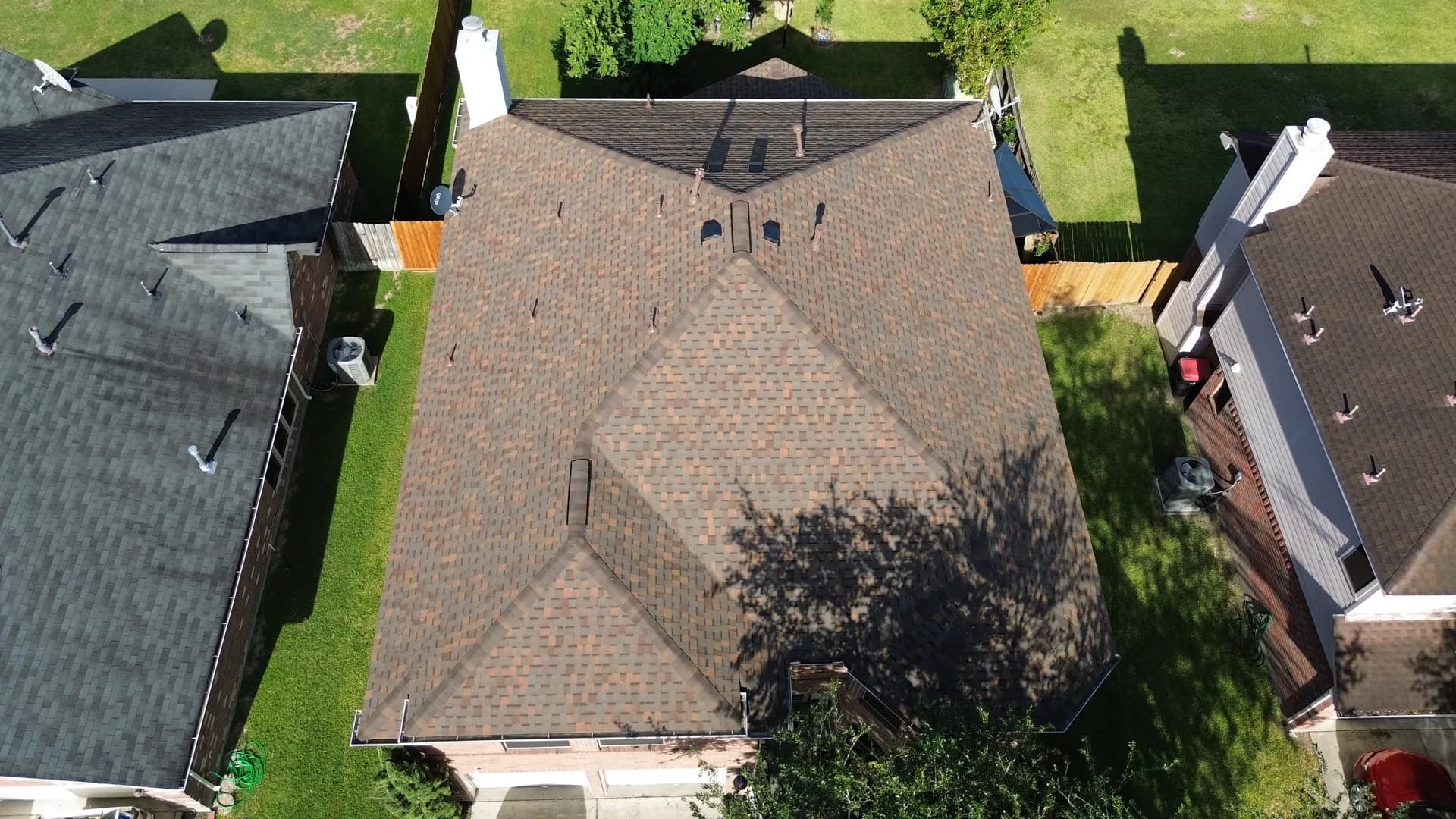
Roofing
Roof Ventilation Installation in The Woodlands, TX
Balanced attic airflow, built for Texas heat.
What's Included
Roof Ventilation Installation in The Woodlands, TX
Ridge Vent Installation
A low-profile exhaust vent runs the length of the roof peak, letting hot attic air escape without a visible box or turbine interrupting your roofline.
Soffit Vent Installation
Intake vents installed under the eaves pull cooler outside air up into the attic, which is what actually makes a ridge vent work instead of sitting there doing nothing.
Air Vent Certified Products
We install Air Vent ventilation products, a manufacturer built specifically around residential and commercial roof airflow systems.
Balanced Intake and Exhaust Sizing
We calculate intake and exhaust together so the system pulls air through the attic in one direction instead of short-circuiting itself.
Static and Powered Vent Options
From simple static roof vents to powered attic fans for attics that need extra airflow, we walk you through which option actually fits your roof.
Licensed and Insured Installation
Every ventilation job is installed by a licensed and insured crew that flashes and seals each vent penetration correctly the first time.
Why Roof Ventilation Matters in Texas Heat
An attic with no airflow turns into an oven every summer afternoon in Montgomery County. That trapped heat doesn't stay put. It pushes down through the insulation and into the ceiling below. Your air conditioner runs longer just to hold the same temperature. Meanwhile, the roof deck bakes from underneath, day after day. Shingles installed over a hot, poorly vented attic tend to age faster than the same shingles on a roof that breathes.
Heat isn't the only problem. Humid Gulf Coast air finds its way into attics too. Without a path out, that moisture condenses on the underside of the decking. Over time, that shows up as mold, soft spots, or rusted fasteners. None of those are cheap fixes once they set in. A properly vented attic moves both heat and moisture out before they cause damage. That's why we treat ventilation as part of a healthy roofing system, not an afterthought.
Ridge, Soffit, Static, and Powered Vents
Most healthy attic systems pair an intake point with an exhaust point. Ridge vents sit along the peak of the roof. They let hot air escape at the highest point in the attic, right where heat collects. Soffit vents go under the eaves. They pull fresh air in at the lowest point. Together, they create steady airflow from the bottom of the attic to the top, and that combination is what most Texas homes are actually missing.
Static roof vents are a simpler exhaust option. They use individual vent boxes cut into the roof deck instead of one continuous ridge run, which works well where a full ridge vent isn't practical. Powered attic fans go a step further. A motor actively pulls air out, which helps attics with unusual framing or limited natural airflow. Want to cut attic heat without adding an electric fan? Our solar attic fan installation page covers the solar-powered alternative we install.
Air Vent Products We Install
Air Vent is the ventilation manufacturer we install most often. Their lineup covers ridge vents, soffit vents, and static and powered roof vents. Sticking with one manufacturer's system for intake and exhaust helps the parts work together the way they were engineered to. Mixing brands and hoping the airflow numbers line up is a bad bet.
We spec Air Vent products on a full roof replacement or a simple ventilation upgrade on a roof that still has life left in it. Either way, the vent hardware gets tied into the roofing system correctly. Every penetration gets flashed and sealed.
The Balanced System Principle and Signs of Poor Ventilation
A ventilation system only works if intake and exhaust are balanced. Add a powerful exhaust vent without enough intake, and you can pull conditioned air out of the living space instead of hot air out of the attic. That defeats the purpose entirely. We calculate net free area for both intake and exhaust before recommending a system. We don't just bolt on whatever vent looks like it'll fit.
A few signs point to an attic that isn't venting right. Shingles that curl or wear unevenly across the roof. A noticeably hot upstairs even with the air conditioner running. Visible condensation or dark staining on the underside of the roof deck. A musty smell when you open the attic hatch. None of these are dramatic on their own, and that's exactly why they get ignored until the damage runs deeper than it needed to. Noticing any of these? It's worth having someone look at the attic before your next reroof, not after.
Related Services
More Roofing Services
Roof Repair
Learn moreEmergency Roof Repair
Learn moreRoof Replacement
Learn moreNew Roof Installation
Learn moreRoof Inspection
Learn moreStorm Damage Roof Repair
Learn moreSolar Attic Fan Installation
Learn moreRoof Leak Repair
Learn moreHail Damage Roof Repair
Learn moreWind Damage Roof Repair
Learn moreRoof Insurance Claim Documentation
Learn moreRoof Replacement Cost
Learn moreHail Damage Roof Inspection
Learn moreEmergency Roof Tarping
Learn moreRoof Decking Repair
Learn moreSynthetic Shingle Roofing
Learn moreGet Your Free Roof Ventilation Installation Estimate
Serving The Woodlands, Magnolia, and the greater Houston area, ROYH Build Co will assess your roof ventilation installation needs and give you a straightforward recommendation.
Frequently Asked Questions
What's the difference between ridge vents and soffit vents?
Ridge vents run along the peak of the roof and let hot attic air escape. Soffit vents sit under the eaves and pull cooler outside air in. They're designed to work as a pair, with soffit vents supplying the intake air that ridge vents need to actually exhaust anything.
How do I know if my attic isn't ventilated properly?
Common signs include shingles wearing unevenly, an upstairs that stays hot even with the AC running, visible moisture or dark staining on the underside of the roof deck, and a musty smell in the attic. Any of these is worth a closer look before your next roof project.
Do I need powered attic vents if I already have ridge vents?
Not always. A properly balanced ridge and soffit vent system handles airflow on most homes without a powered fan. Powered attic vents or solar attic fans make more sense on attics with unusual framing, limited soffit space, or other conditions that limit natural airflow. We assess your attic before recommending either option.
Can I add roof ventilation without replacing my whole roof?
Yes. Ridge vents, soffit vents, and static or powered vents can typically be added or upgraded on an existing roof as long as the shingles and decking are in good condition. If the roof is already due for a reroof, we build the ventilation system into the replacement so everything is installed and flashed at once.