
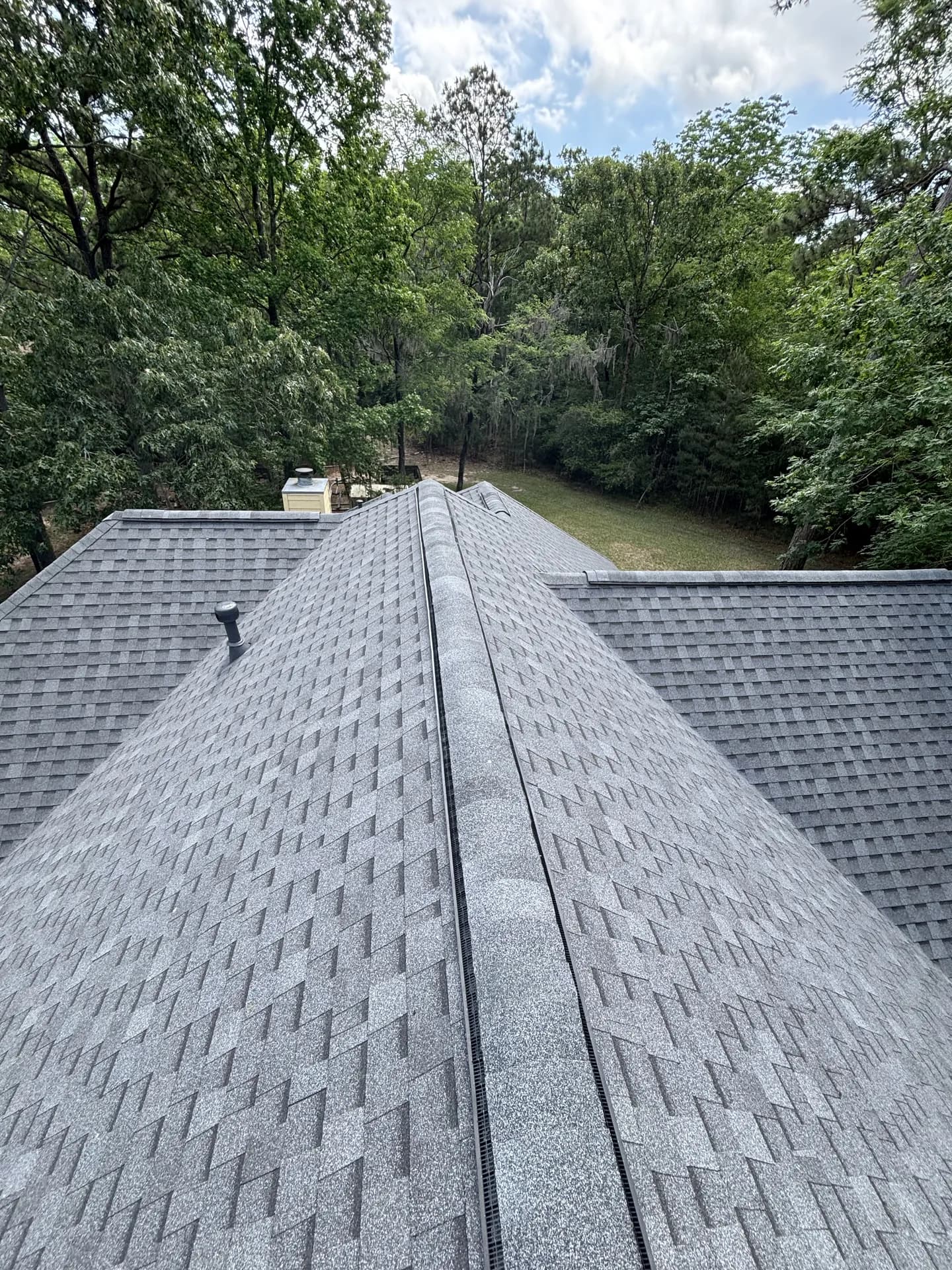
Roofing
Solar Attic Fan Installation in The Woodlands, TX
Solar attic fan installation pulls hot air out of the attic during the hottest part of the day, without adding a line to your electric bill. We install MrCool units and flash every mount ourselves.
What's Included
Solar Attic Fan Installation in The Woodlands, TX
MrCool Solar Units
We install MrCool solar attic fans, a supplier we've chosen specifically for solar ventilation work.
Roofer-Done Flashing
The mount is flashed by a roofing crew, not a handyman or an HVAC tech unfamiliar with shingle systems.
No Added Electric Load
The fan runs on its own solar panel, so it doesn't tie into your home's electrical panel or add a wired circuit.
Placement Assessment Included
We walk the attic and roof plane before installing anything to find a mounting spot that actually moves air where it's needed.
Works With Existing Ventilation
We check your current soffit and ridge vents first so the solar fan adds to your attic airflow instead of fighting it.
How a Solar Attic Fan Actually Works
A solar attic fan is simpler than most homeowners expect. A small solar panel, usually mounted right on top of the fan housing, powers a motor that spins a fan blade set into a vent cut through the roof deck. No wiring runs into the house, no breaker gets flipped, and there's nothing to plug in.
When the sun is out, the panel generates power and the fan pulls hot air out of the attic and pushes it outside. When the sun goes down, the fan stops. That's the tradeoff worth understanding up front: it's not running at 9pm when the attic is still holding heat from the day. It's built to work during daylight hours, which is also when solar gain on the roof is adding the most heat to the attic in the first place.
The units we install come from MrCool, a supplier we chose for solar attic ventilation specifically. We're not mixing and matching random fan brands off a supply house shelf.
Why Attic Heat Matters in a Texas Summer
Attics in this part of Texas get brutally hot. A dark asphalt shingle roof under direct summer sun can push attic temperatures well above the outdoor air temperature, and that heat doesn't stay contained up there. It radiates down through the attic floor and pushes against your ceiling insulation all day long.
The practical effect for most homeowners is a house that works harder to stay cool in the rooms directly under the attic, and shingles and roof decking that spend more hours at peak temperature than they would with better airflow moving through. We're not going to hand you a specific number for what a solar attic fan will save on your electric bill. That depends on your insulation, your existing ventilation, your HVAC system, and how your particular attic is built. What we can tell you is that moving hot air out of an attic that's currently sitting stagnant is a straightforward improvement, and it's one a lot of homes around here are missing.
Installation and Placement: What We Actually Check
Cutting a hole in a roof deck and mounting a fan on top of it sounds simple. Doing it without creating a future leak point is where the roofing part of this job matters.
Before we install anything, we walk the attic and the roof plane. We're looking at slope orientation (a fan mounted on a south or west-facing slope generally sees more sun exposure), the framing underneath so the cut lands in a safe spot, and how close the unit will sit to existing roof penetrations like plumbing stacks or HVAC vents. Placement affects how much sun the panel gets and how evenly the fan can pull air across the attic.
The flashing is the part we take the most seriously. A solar attic fan is a roof penetration like any other, and it only stays watertight if the flashing is installed correctly and integrated with the surrounding shingles the way a roofer would do it, not sealed over with caulk and left alone. We handle that step ourselves because it's roofing work, not an add-on task for whoever happens to be on site that day. It's the same standard we hold on every job listed on our roofing services page, whether it's a small vent mount or a full reroof.
If your roof already shows granule loss or wear from years of trapped attic heat baking the underside of the shingles, that's a separate conversation from ventilation. In that case we'd look at whether a roof repair is warranted before or alongside the fan installation, rather than mounting a new vent on decking that needs attention first.
Pairing a Solar Attic Fan With Passive Ventilation
A solar attic fan works best as part of a system, not as a standalone fix. If your attic doesn't have enough intake air coming in through soffit vents, an active fan can end up straining to pull air from wherever it can find it, including conditioned space inside the house through gaps and can lights. That's the opposite of what you want.
Before we recommend a solar attic fan, we look at what's already in place. If your roof ventilation setup is missing adequate soffit intake or ridge venting, we'll talk through what needs to happen first so the solar fan has enough incoming air to actually work as designed. Sometimes that means adding passive vents alongside the solar unit. Sometimes the existing ventilation is already solid and the fan is a clean addition on its own.
Related Services
More Roofing Services
Roof Repair
Learn moreEmergency Roof Repair
Learn moreRoof Replacement
Learn moreNew Roof Installation
Learn moreRoof Inspection
Learn moreStorm Damage Roof Repair
Learn moreRoof Ventilation Installation
Learn moreRoof Leak Repair
Learn moreHail Damage Roof Repair
Learn moreWind Damage Roof Repair
Learn moreRoof Insurance Claim Documentation
Learn moreRoof Replacement Cost
Learn moreHail Damage Roof Inspection
Learn moreEmergency Roof Tarping
Learn moreRoof Decking Repair
Learn moreSynthetic Shingle Roofing
Learn moreGet Your Free Solar Attic Fan Installation Estimate
Serving The Woodlands, Magnolia, and the greater Houston area, ROYH Build Co will assess your solar attic fan installation needs and give you a straightforward recommendation.
Frequently Asked Questions
Do solar attic fans work on cloudy days?
They run on less power on cloudy days because the panel generates less electricity, so the fan spins slower or intermittently depending on how much sun the panel is getting. They're designed around sunny, hot conditions since that's when attic heat buildup is worst anyway. On a heavily overcast day the fan will do less work, but that also tends to be a day when the attic isn't building up as much heat in the first place.
Will a solar attic fan damage my roof?
Not if it's installed and flashed correctly. Every roof penetration, including a solar attic fan mount, is a potential leak point if the flashing isn't done right or isn't properly integrated with the surrounding shingles. That's why we treat this as roofing work and handle the cut and flashing ourselves rather than leaving it to whoever is installing the unit. A properly flashed fan performs the same as any other roof vent.
How many solar attic fans does my house need?
It depends on your attic size, roof shape, and how much passive ventilation you already have through soffit and ridge vents. Some homes do fine with a single unit placed well. Others, especially larger attics or homes with limited passive airflow, benefit from more than one. We won't give you a number without walking the attic first. It's an assessment, not a one-size answer.
Does a solar attic fan add anything to my electric bill?
No. The fan runs entirely off the solar panel mounted with it and doesn't tie into your home's electrical panel or wiring. There's no circuit to install and nothing pulling from the grid.