
Roofing
Data Center Roof Construction in The Woodlands, TX
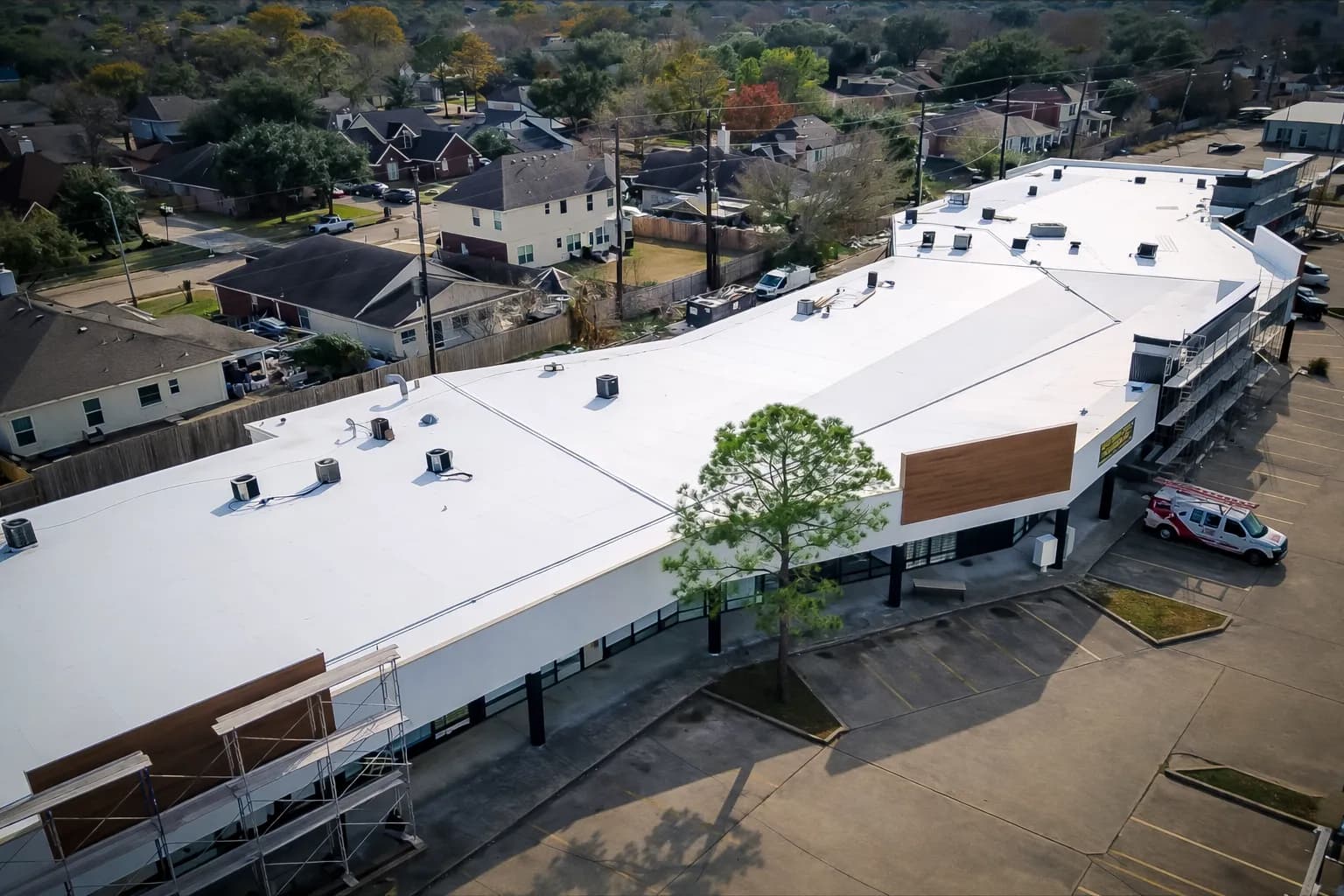
ROYH Build Co supports data center roof construction with commercial-grade TPO, PVC, and standing seam metal systems built around critical facility uptime, not a generic flat roof spec.
What's Included
Data Center Roof Construction in The Woodlands, TX
TPO, PVC, and Modified Bitumen Systems
Versico and Duro-Last membranes matched to a data center roof's slope, drainage, and rooftop equipment load.
Standing Seam Metal Roofing
McElroy Metal concealed-fastener panel systems for sloped sections and equipment screens on a critical facility.
Penetration and Curb Detailing
Careful flashing and sealing around the HVAC, generator, and cable penetrations a data center roof carries in higher density than a typical building.
Reflective, Cooling-Conscious Membrane Options
Lighter membrane options that help manage rooftop heat gain on a facility already running a heavy mechanical cooling load.
Phased Scheduling Alongside Other Trades
Roof work sequenced with electrical, mechanical, and structural trades on a live construction site instead of one uninterrupted window.
Commercial-Grade Process, Not a Generic Flat Roof Quote
Every recommendation starts with a walk of the deck and a review of the equipment going on top of it.
Why Data Center Roofs Carry a Different Standard
A data center roof isn't judged like a retail strip center roof. The building underneath runs racks of equipment, and that equipment can't tolerate water intrusion. Not even the slow, small kind a typical commercial roof might shrug off for a season. Watertightness over the critical load areas, generator pads, cooling equipment, electrical rooms, has to hold up from day one. It has to stay that way for years. A leak over server infrastructure isn't a maintenance ticket. It's a business continuity problem.
Penetration density is the other thing that sets this roof type apart. Data centers route a lot of HVAC, cabling, and mechanical equipment through the roof deck. Every one of those penetrations is a place water can get in if the flashing and sealing aren't done right. More penetrations mean more places to get it wrong. It also means the roofing crew has to coordinate closely with the mechanical and electrical trades, not work in isolation. Reflectivity matters here too. A facility running heavy cooling loads needs a membrane that keeps rooftop heat gain down instead of adding to the cooling burden. It also needs a roof surface that's easy to walk and inspect without disturbing the equipment on top of it. Roofing on a build like this gets planned as part of the building's operating requirements. It doesn't get bolted on at the end.
Membrane and Metal Systems Built for This Kind of Load
ROYH Build Co installs the same commercial-grade systems on a data center project that we use on any large low-slope commercial building. Each system gets matched to what that specific roof needs. Our TPO roofing uses Versico and Duro-Last membranes. These are heat-welded single-ply systems that give you a reflective, seam-tight surface built to handle Texas heat cycling and ponding water on a large flat roof deck. Where a building needs stronger chemical or puncture resistance, PVC roofing from the same supplier lines is often the better fit. That's especially true on roofs carrying heavier rooftop equipment traffic.
Sloped sections, equipment screens, or architectural roof elements are a different story. That's where standing seam metal roofing comes in. We install McElroy Metal panel systems with concealed fasteners. That detail matters on a roof carrying a lot of rooftop equipment, since there are fewer exposed fastener points for water to work through over time. None of these are exotic systems. They're the same commercial roofing systems used across the offices, warehouses, and retail buildings we've worked on, applied with the tighter tolerance a mission-critical facility needs.
A Process Built for Phased, Mission-Critical Construction
Data center construction rarely happens in one clean pass. Roofing crews are usually working alongside electrical, mechanical, and structural trades on a live schedule. A roofing contractor who can't adapt to that sequencing becomes the bottleneck. We plan roof work in phases where the project calls for it. That means coordinating deck readiness, penetration timing, and final membrane closure with the general contractor's overall schedule, instead of insisting on one uninterrupted window.
We're a commercial roofing contractor first, and that shows in how we approach a project like this. Every job starts with a walk of the roof deck. We review what's going on top of it, generator placement, HVAC layout, cable runs, before we recommend a system. That's what decides whether TPO, PVC, or a standing seam metal section is the right call for a given roof area, not a generic spec sheet. If you're developing or managing a facility in the Houston area's growing data center corridor, we'd rather walk the site and give you a straightforward system recommendation than sell you a one-size-fits-all flat roof quote.
Get Your Free Data Center Roof Construction Estimate
Serving The Woodlands, Magnolia, and the greater Houston area, ROYH Build Co will assess your data center roof construction needs and give you a straightforward recommendation.
Frequently Asked Questions
What roofing system is best for a data center roof?
It depends on the roof area and what's running on top of it. Low-slope sections with heavy rooftop mechanical equipment usually call for a TPO or PVC single-ply membrane from Versico or Duro-Last, chosen based on chemical and puncture resistance needs. Sloped sections or equipment screens often work better as standing seam metal roofing from McElroy Metal, which has fewer exposed fasteners for water to work through over time. We walk the deck and review the equipment plan before recommending a system rather than defaulting to one option for the whole roof.
How does roofing work fit into a data center's overall construction schedule?
Roofing on a data center project usually runs alongside electrical, mechanical, and structural trades rather than as an isolated phase. We coordinate deck readiness, the timing of roof penetrations for HVAC and cabling, and final membrane closure with the general contractor's schedule, and we plan the work in phases where the project layout requires it. That kind of sequencing matters more on a mission-critical build than it does on a standard retail or office roof.
Is TPO or PVC roofing better for a data center's cooling loads?
Both TPO and PVC membranes are reflective, which helps limit rooftop heat gain on a facility already running a heavy mechanical cooling load. TPO is a cost-effective, widely used option for that reflectivity. PVC costs more but holds up better against chemical exposure and heavier rooftop foot traffic, which can matter on a roof with a lot of mechanical equipment installed and serviced on top of it. We compare both against your building's actual equipment plan before recommending one.
How do you manage roof penetrations for HVAC and cabling on a data center roof?
Data centers route more HVAC, cabling, and mechanical equipment through the roof deck than a typical commercial building, and every penetration is a potential leak point if it isn't flashed and sealed correctly. We coordinate penetration locations with the mechanical and electrical trades before the membrane goes down, detail each curb and pipe boot to manufacturer spec, and keep penetration counts as low as the equipment plan allows.