
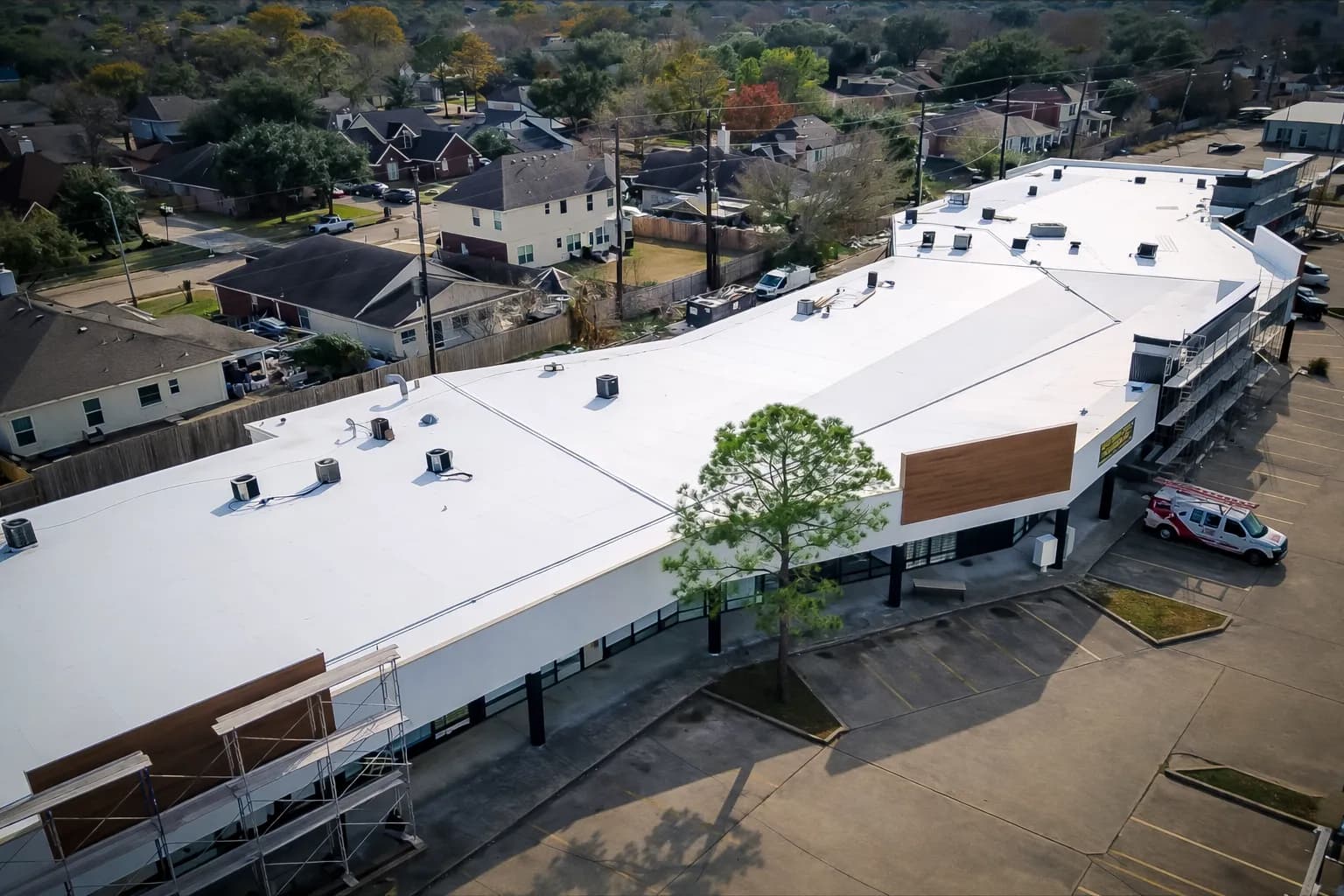
Roofing
Commercial Roof Coating in The Woodlands, TX
ROYH Build Co applies silicone, acrylic, and elastomeric roof coatings to extend the life of commercial roofs across The Woodlands and Greater Houston, restoring worn membranes without the cost of a full tear-off.
What's Included
Roof Coating in The Woodlands, TX
Silicone, Acrylic, and Elastomeric Systems
We install the coating chemistry that fits your roof, not a single one-size-fits-all product.
Reflective, Cool-Roof Performance
Light-colored coatings reflect more sunlight than a dark, weathered membrane, which helps ease rooftop heat gain during Texas summers.
Works on TPO, Metal, and Modified Bitumen
Coatings can extend the service life of several existing roof types, not just one system.
Seals Seams and Minor Membrane Damage
The coating process addresses small punctures, seam wear, and flashing details before the fluid membrane goes down.
Full Roof Assessment Before Any Recommendation
We walk the roof, check the deck and drainage, and tell you honestly whether coating or replacement is the better move.
Locally Owned and Operated
ROYH Build Co serves The Woodlands and Magnolia, TX, and works directly with property managers, GCs, and business owners across the region.
What a Roof Coating Actually Does
A roof coating is a fluid-applied membrane installed directly over an existing commercial roof. It is not a cosmetic layer. Applied correctly, it seals minor seam gaps and small punctures, restores flexibility to a membrane that has spent years cycling through Texas heat and rain, and adds a fresh weatherproof barrier on top of what is already there. That combination is what buys a roof more years of service without a full tear-off.
Most commercial coatings are also reflective, meaning they bounce more sunlight back off the roof than a dark, sun-baked membrane does. On a low-slope building, that matters. Less heat absorbed at the roof surface means the rooftop equipment, insulation, and top-floor ceiling underneath aren't taking on as much heat load during the hottest part of a Houston-area summer. We won't hand you a manufactured percentage on energy savings, because that number depends on the building, the HVAC system, and the existing roof condition. What we can say honestly is that a reflective coating changes how much heat a roof surface absorbs, and building owners who coat an aging membrane generally notice a cooler roof deck. For a broader look at how coating fits alongside repair and replacement, see our full commercial roofing services.
Silicone, Acrylic, and Elastomeric Coatings: What's the Difference
Not all roof coatings are the same product wearing a different label. Silicone coatings hold up well against ponding water, which makes them a strong fit for flat roofs with drainage that isn't perfect. Acrylic coatings are a common, cost-effective option for sloped or well-drained roofs, though they aren't the right call where water tends to sit. Elastomeric coatings, a broader category that includes some acrylic and urethane products, stretch and flex with the roof surface as temperatures swing, which helps them survive Texas weather without cracking.
None of these is universally "better." The right product depends on your roof's slope, drainage, existing membrane material, and how much foot traffic or rooftop equipment it deals with. We've seen contractors push a single coating line on every job regardless of fit, and that's backwards. We spec the coating to the roof, not the other way around.
When Coating Is the Right Call (and When It Isn't)
A coating works best on a roof that is still structurally sound but showing its age: minor cracking, some seam wear, fading, maybe a few small leaks that have already been patched. If that describes your roof, coating usually costs less than tearing it off and starting over, and it's worth serious consideration before you commit to a full replacement.
It is not the right answer for every roof. A membrane with widespread damage, saturated insulation underneath, or a deck that's failing structurally needs more than a surface treatment. Coating a roof in that condition just delays a problem that's going to resurface, often at a worse point than if you'd replaced it the first time. We'll tell you when that's the case rather than sell you a coating that won't hold. If your roof needs targeted repairs first, our flat roof repair team handles that, and if the roof has genuinely reached the end of its life, we'll walk you through commercial roof replacement instead.
Prep and Application: How the Process Works
Coating goes down in stages, and skipping steps is how coatings fail early. We start by pressure washing the roof surface to strip off dirt, chalking, and biological growth that would keep the coating from bonding. Next comes the detail work: resealing open seams, patching punctures, and addressing flashing around HVAC curbs, drains, and roof penetrations. This is often the same scope of work covered under TPO roofing repairs, just done as prep rather than a standalone fix.
Once the surface is clean and repaired, we prime it if the coating manufacturer's spec calls for it, then apply the coating itself, typically in two coats for full mil thickness and even coverage. We inspect the finished surface before calling the job done, checking that seams, penetrations, and drain areas got full coverage, not just the open field of the roof. It's a straightforward process on paper. Getting it right depends on doing the prep work nobody sees, not just the coat that ends up visible from the parking lot.
Get Your Free Roof Coating Estimate
Serving The Woodlands, Magnolia, and the greater Houston area, ROYH Build Co will assess your roof coating needs and give you a straightforward recommendation.
Frequently Asked Questions
How long does a roof coating last?
It depends on the coating type, the condition of the roof underneath, and how well the roof is maintained afterward. A properly applied coating on a sound membrane can add meaningful years of service life, and most systems can be recoated down the road rather than replaced outright. We'll give you a realistic expectation for your specific roof during the assessment rather than a generic number that doesn't account for your building.
Can any commercial roof be coated?
No. Coating works well on roofs that are still structurally sound with only moderate wear, minor cracking, seam issues, or surface fading. It's not a fix for a membrane with widespread damage, saturated insulation, or an underlying deck problem. We walk every roof before recommending a coating, and if it isn't a good candidate, we'll tell you that instead of applying a coating that won't hold up.
Does a reflective roof coating actually lower energy use?
A reflective coating bounces more sunlight off the roof surface than a dark, weathered membrane does, which reduces how much heat the roof absorbs and passes into the building below. How much that translates into lower cooling costs depends on your HVAC system, insulation, and building layout, so we won't quote you a made-up savings percentage. What we can tell you is that building owners who coat an aging, dark membrane typically notice a cooler roof deck during the summer.
What's the difference between coating a roof and replacing it?
Coating adds a new protective, reflective layer over an existing membrane that's still structurally sound, which extends its service life without a full tear-off. Replacement strips the roof down to the deck and installs an entirely new system, which is the right call once the existing membrane, insulation, or deck has deteriorated past the point a coating can fix. We'll assess your roof honestly and recommend whichever one actually makes sense for its condition.