
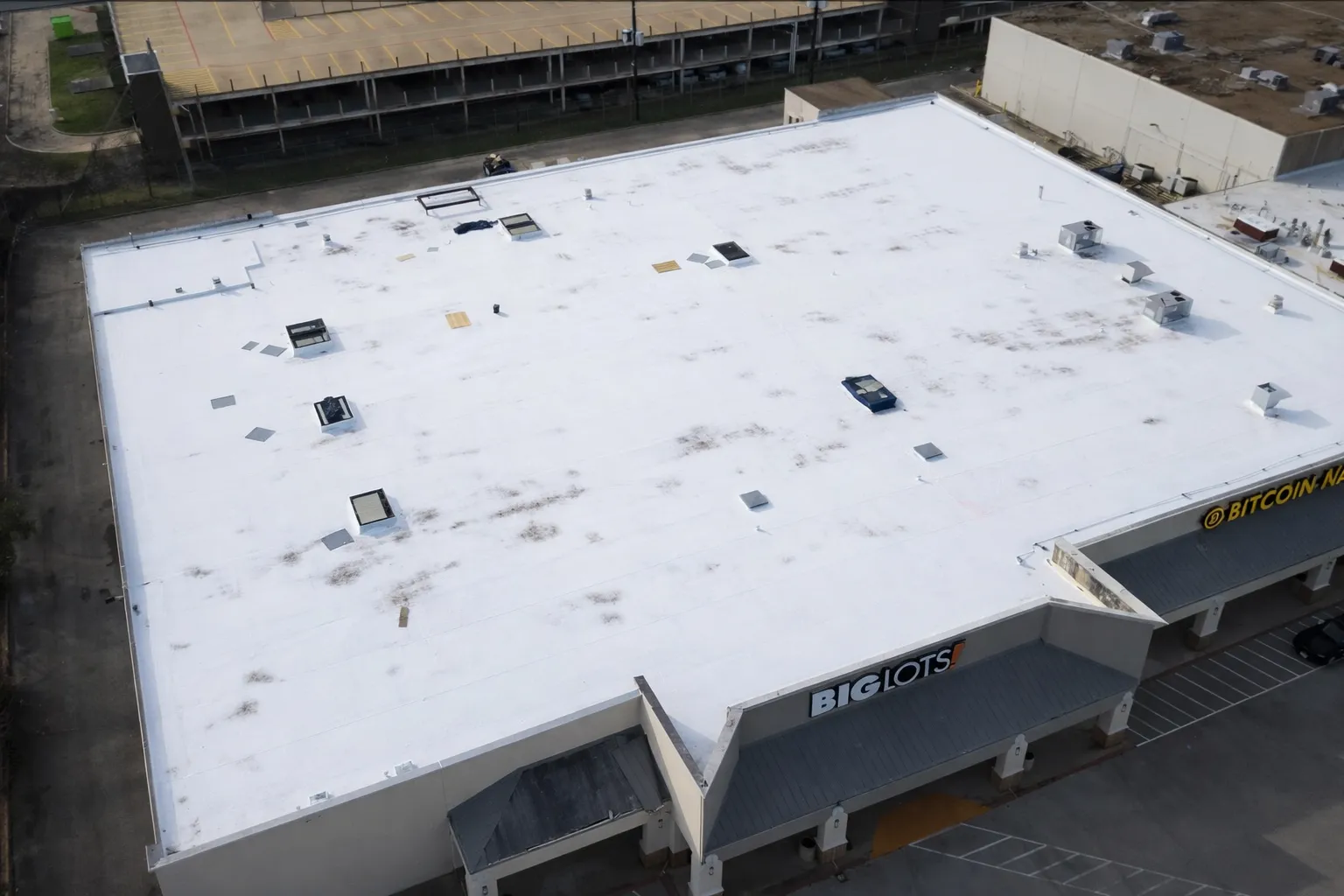
Roofing
Commercial Roof Maintenance in The Woodlands, TX
Scheduled Commercial Roof Maintenance for Low-Slope Buildings
What's Included
Commercial Roof Maintenance in The Woodlands, TX
Drains, Scuppers, and Ponding
Standing water is the most common cause of premature membrane failure on a low-slope roof. We clear drains and scuppers and flag areas that are holding water after they should have drained.
Seam and Flashing Inspection
We check field seams, perimeter and base flashings, and termination bars for separation or lifting, which is where most low-slope leaks actually start.
Penetrations and Curbs
HVAC curbs, pitch pockets, vents, and conduit supports get inspected every visit. Rooftop equipment work by other trades is a frequent source of new, undocumented penetrations.
Documented Visits
Every maintenance visit produces a written record of what was found and what was addressed, which is the documentation manufacturers, insurers, and landlords ask for.
Warranty Compliance
Manufacturer warranties on commercial membrane systems commonly carry maintenance and repair conditions. Regular documented service is how you keep that coverage intact.
Post-Storm Checks
After significant wind or hail we can add an inspection outside the normal schedule, so damage is identified while it is still a claim rather than an interior loss.
Why Low-Slope Roofs Need a Schedule, Not a Phone Call
A steep-slope residential roof sheds water whether anyone is paying attention or not. A commercial low-slope roof does not. It relies on drains staying clear, seams staying welded, and flashings staying attached, and every one of those is a thing that degrades quietly. By the time a low-slope roof announces itself, water has usually been tracking through insulation for a while and the stain on the ceiling tile is nowhere near the actual entry point.
That is the argument for a schedule. Two planned visits a year on a building cost far less disruption than one emergency at the wrong moment, and the items that get caught on a maintenance visit are almost always small: a blocked drain, a loose termination bar, a pitch pocket that has dried out. Left alone for another eighteen months, the same items turn into saturated insulation and a commercial roof replacement conversation years ahead of schedule.
What a Maintenance Visit Covers
Every visit works through the same sequence so nothing depends on who happened to be on the roof that day.
Drainage
Drains, scuppers, and overflow points get cleared of debris, and the surrounding field gets checked for ponding. Water sitting on a membrane accelerates weathering, adds structural load, and turns any small seam defect into an active leak. On roofs with heavy tree cover or nearby construction, drainage alone justifies the visit.
Membrane and Seams
We walk the field looking for punctures, blisters, and open or lifting seams, then work the perimeter: base flashings, wall terminations, coping, and edge metal. Perimeter details fail before the field does on most systems, and they are also where wind uplift starts.
Penetrations and Rooftop Equipment
HVAC curbs, exhaust fans, vents, pitch pockets, and conduit supports each get inspected. This is the single most productive part of the visit on an occupied building. Mechanical, electrical, and telecom trades work on roofs regularly, and new penetrations get cut without anyone telling the roofer. Finding one on a scheduled visit is straightforward. Finding it after a storm is not.
The Written Record
Findings and any work performed are documented. Over a few years that record becomes genuinely useful: it shows whether a recurring problem is isolated or systemic, it supports an insurance claim after a storm, and it is what a manufacturer will ask for if you ever need to invoke a system warranty.
Systems We Maintain
We service the low-slope systems we install and repair, which covers most of what sits on commercial buildings in this market: TPO and PVC single ply, modified bitumen, and coated roofs. Our commercial membrane systems come from Duro-Last and Versico, so we know how those assemblies are detailed and what their warranties expect.
Where a roof is aging but structurally sound, maintenance and a roof coating often make more sense together than either does alone. A coating over a roof with clogged drains and open seams is money spent on the wrong problem. Fixing the details first and coating afterward is the order that actually extends service life.
Maintenance, Repair, and Replacement Are Different Conversations
Maintenance is scheduled and preventive. Commercial roof repair is what happens when something has already failed and needs fixing now. Replacement is what maintenance is meant to postpone.
We will tell you which one you are actually in. If a roof is far enough gone that maintenance is only buying months, we would rather say so than sell you visits on an assembly that needs replacing. Equally, if a building owner has been quoted a full replacement on a roof that mainly needs its drains cleared and its perimeter reflashed, that is worth knowing too. Get in touch and we will come look at it.
Get Your Free Commercial Roof Maintenance Estimate
Serving The Woodlands, Magnolia, and the greater Houston area, ROYH Build Co will assess your commercial roof maintenance needs and give you a straightforward recommendation.
Frequently Asked Questions
How often should a commercial roof be inspected?
Twice a year is the common baseline, typically once before hurricane season and once after, with an additional visit following any significant wind or hail event. Buildings with heavy tree cover, frequent rooftop equipment work, or a roof past the middle of its expected service life often warrant a tighter interval. We set the schedule based on the building rather than applying one frequency to everything.
Does maintenance affect my roof warranty?
It generally matters a great deal. Manufacturer warranties on commercial membrane systems commonly include conditions around maintenance, timely repair, and how alterations to the roof are handled. A documented maintenance record is how you demonstrate those conditions were met. Skipping maintenance, or letting another trade cut penetrations without proper repair, is a frequent reason coverage gets contested.
What is the difference between maintenance and a repair call?
Maintenance is scheduled preventive work on a roof that is not currently leaking: clearing drains, checking seams and flashings, inspecting penetrations, and documenting condition. A repair call responds to something that has already failed. The point of maintenance is to reduce how often you need the second kind of visit, and to catch the small items while they are still small.
Can you maintain a roof your company did not install?
Yes. We maintain existing TPO, PVC, modified bitumen, and coated low-slope roofs regardless of who originally installed them. On a first visit we assess the system and its current condition, then set a schedule from there. If the roof is close enough to the end of its service life that maintenance would only be deferring the inevitable, we will tell you that rather than start a program on it.