
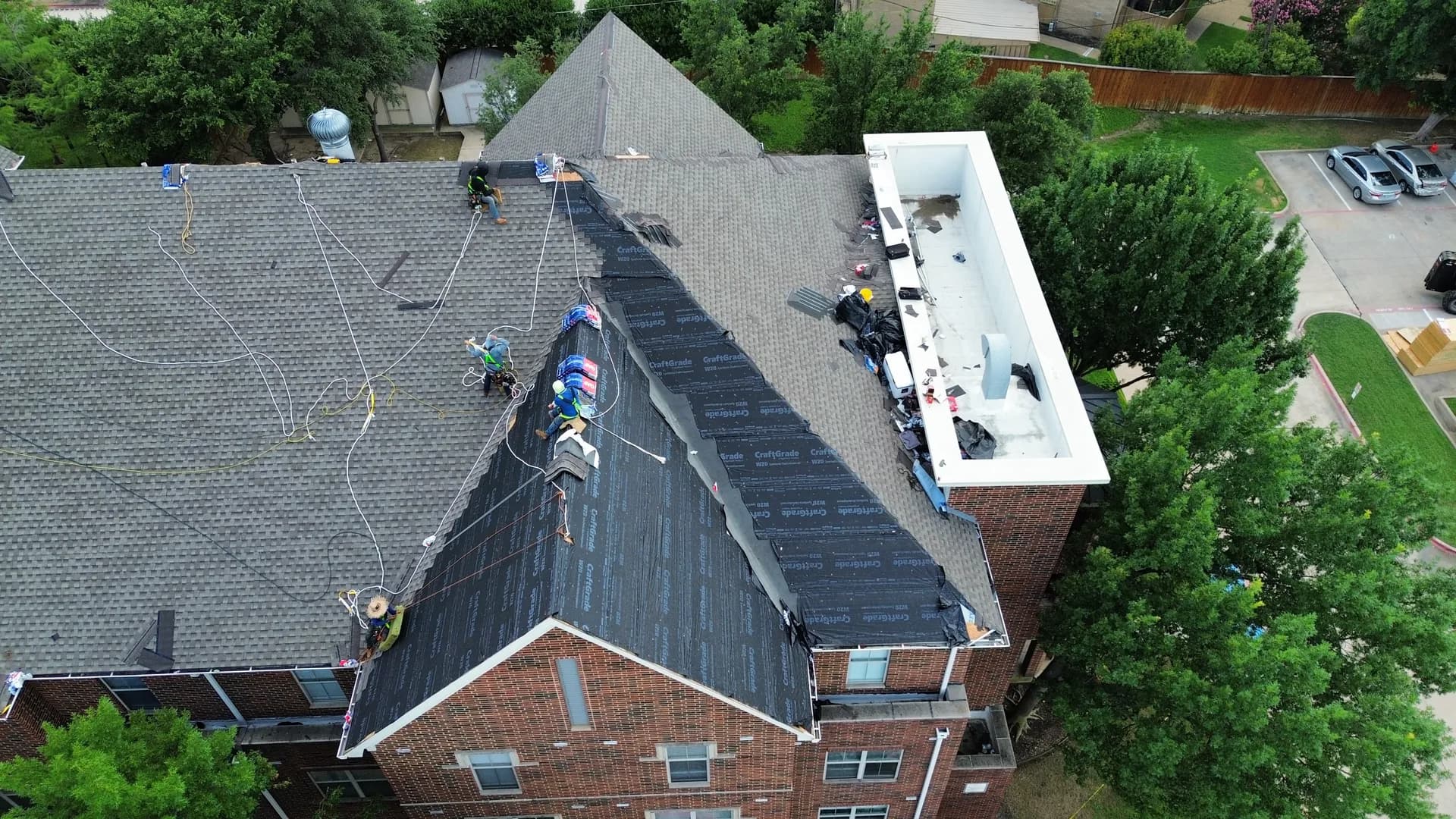
Roofing
Modified Bitumen Roofing Installation in The Woodlands, TX
ROYH Build Co installs and repairs modified bitumen roofing, a multi-ply asphalt membrane system built for heavy rooftop traffic and Gulf Coast weather on commercial buildings across The Woodlands and Greater Houston.
What's Included
Modified Bitumen Roofing in The Woodlands, TX
Versico Modified Bitumen Systems
Multi-ply asphalt membranes from Versico, matched to your building's deck, drainage, and rooftop equipment load.
SBS and APP Membrane Options
We install both SBS and APP modified bitumen membranes depending on the flexibility and UV exposure your roof needs.
Built for Heavy Rooftop Traffic
A layered, reinforced membrane that stands up to foot traffic around HVAC units, vents, and other rooftop equipment.
Torch, Cold-Adhesive, or Self-Adhered Install
We choose the application method that fits your building's occupancy, deck type, and fire-safety requirements.
Repair and Restoration Service
Seam separation, blistering, or a worn cap sheet on an existing modified bitumen roof does not always mean a full tear-off.
Locally Owned and Operated
ROYH Build Co serves The Woodlands and Magnolia, TX, and works directly with property managers, GCs, and business owners across the region.
What Modified Bitumen Roofing Is
Modified bitumen roofing is a multi-ply asphalt membrane system built for flat and low-slope commercial roofs. It goes down in two or three plies instead of one sheet. Each ply is a reinforced asphalt sheet, strengthened with a polyester or fiberglass mat, then modified with a rubber or plastic polymer for extra flexibility. That layering is the whole point. If one ply develops a weak spot, the plies underneath still keep the water out. That is why modified bitumen has stayed a standard option on commercial buildings for decades.
Two polymer types matter here: SBS (styrene-butadiene-styrene) and APP (atactic polypropylene). SBS membranes behave more like rubber. They flex well across Houston's wide temperature swings and go down with cold adhesive or a torch. APP membranes lean plastic. They hold up well against UV exposure and usually go down with a torch. We install both through Versico. We will tell you plainly which one fits your building, not just whichever is easiest to install that week.
Built for High-Traffic Roofs and Gulf Coast Weather
Modified bitumen earns its keep on roofs that take a beating. Buildings with heavy rooftop HVAC equipment, frequent maintenance foot traffic, or satellite and mechanical installations put more wear on a membrane than an empty roof deck ever will. The multi-ply structure resists punctures and abrasion better than a thin single-ply sheet. That is why we recommend it often for warehouses, apartment complexes, and buildings with a lot of rooftop mechanical activity.
Gulf Coast weather adds its own demands. Summer heat cycles a roof membrane hard. Humidity works into any seam that is not sealed correctly. Tropical storm systems bring wind-driven rain that tests every flashing detail. A properly installed modified bitumen system, with the plies overlapped and sealed to spec, handles that combination well. It is not the newest roofing technology out there, but it is a proven one. That track record matters more than novelty when your building is the one on the line.
Torch, Cold-Adhesive, and Self-Adhered Application Methods
Modified bitumen membranes go down one of three ways. Torch application uses an open flame to melt the asphalt backing and fuse each ply to the one below it. It produces a strong, fully bonded seam, but it requires strict fire-safety precautions and is not always the right call on an occupied building. Cold-adhesive application uses a liquid adhesive instead of heat. That makes it a safer option for buildings that stay open during the work or sit near flammable materials. Self-adhered, or peel-and-stick, membranes come with an adhesive backing already applied. They go down without heat or wet adhesive at all, which speeds up installation in the right conditions.
We walk every roof before recommending a method. Deck type, building occupancy, nearby fire code restrictions, and weather during the install window all factor into the choice. Torch, cold-adhesive, or self-adhered: whichever makes the most sense for your project is the one we bring.
Repairing and Restoring an Existing Modified Bitumen Roof
An aging modified bitumen roof does not always need a full tear-off. Seam separation, blistering, granule loss on the cap sheet, or a ply that has started to delaminate from the ones below it can often be repaired. That is true as long as the damage is caught before water gets underneath the membrane. Our flat roof repair service handles that kind of targeted work on modified bitumen roofs across Montgomery and Harris counties.
If the roof is structurally sound but showing broad wear, a roof coating can restore the surface and extend its service life without a full replacement. If the membrane has reached the end of what repair or coating can fix, we handle the tear-off and reinstall. That is part of our full commercial roofing service, alongside TPO roofing for buildings ready to switch to a single-ply system instead. Either way, we start with an honest look at the roof, not a sales pitch for the most expensive option on the sheet.
Get Your Free Modified Bitumen Roofing Estimate
Serving The Woodlands, Magnolia, and the greater Houston area, ROYH Build Co will assess your modified bitumen roofing needs and give you a straightforward recommendation.
Frequently Asked Questions
What is the difference between SBS and APP modified bitumen roofing?
SBS (styrene-butadiene-styrene) modified bitumen behaves more like rubber, giving it more flexibility across Houston's temperature swings, and it can go down with cold adhesive or a torch. APP (atactic polypropylene) modified bitumen leans more plastic, which gives it strong UV resistance and typically calls for torch application. We help you choose based on your building's exposure, roof traffic, and occupancy during the install.
How long does a modified bitumen roof last?
A modified bitumen roof typically performs well for many years when it is installed correctly and inspected on a regular schedule. Multi-ply construction gives it extra durability compared to a single-ply membrane, and staying on top of small repairs, like a separated seam or a blistered spot, is usually what determines whether a roof gets its full expected service life out of the system.
Can you repair an existing modified bitumen roof instead of replacing it?
Often, yes. Seam separation, blistering, granule loss, and localized ply delamination can usually be repaired if they are caught early, which is far less disruptive and costly than a full tear-off. We inspect the roof, tell you honestly whether repair, a restorative coating, or full replacement makes sense, and only recommend replacement when the membrane has genuinely reached the end of its service life.
Does modified bitumen roofing hold up in Gulf Coast weather?
Yes, when it is installed to spec. Modified bitumen has a long track record on commercial buildings across the Gulf Coast, where it deals with heat cycling, high humidity, and wind-driven rain from tropical storm systems. Properly overlapped plies and sealed flashing details are what make the difference between a roof that performs for years and one that fails early.