
Roofing
Roofing Materials and Installation in The Woodlands, TX
Compare roofing materials built for Gulf Coast heat, hail, humidity, and wind
What's Included
Roofing Materials in The Woodlands, TX
Metal Roofing
McElroy Metal standing seam and exposed-fastener panels that reflect heat and hold up to hail better than most roofing materials.
Standing Seam Metal Roofing
Concealed fasteners and clean vertical panels for a low-maintenance roof with a tighter, more refined look than exposed-fastener metal.
Asphalt Shingle Roofing
GAF, Atlas, and CertainTeed shingle systems, including Platinum-tier certifications, for homeowners who want the traditional shingle look at a lower upfront cost.
Tile Roofing
Westlake Royal concrete and Spanish tile for a Mediterranean-style roof that holds its color and shape through Texas summers.
Slate Roofing
Natural and DaVinci composite slate for homeowners who want the slate look without the extra structural weight.
Synthetic Shake Roofing
F-Wave synthetic shingles that mimic a wood shake profile with better impact resistance and less maintenance.
Choosing a Roofing Material for the Gulf Coast
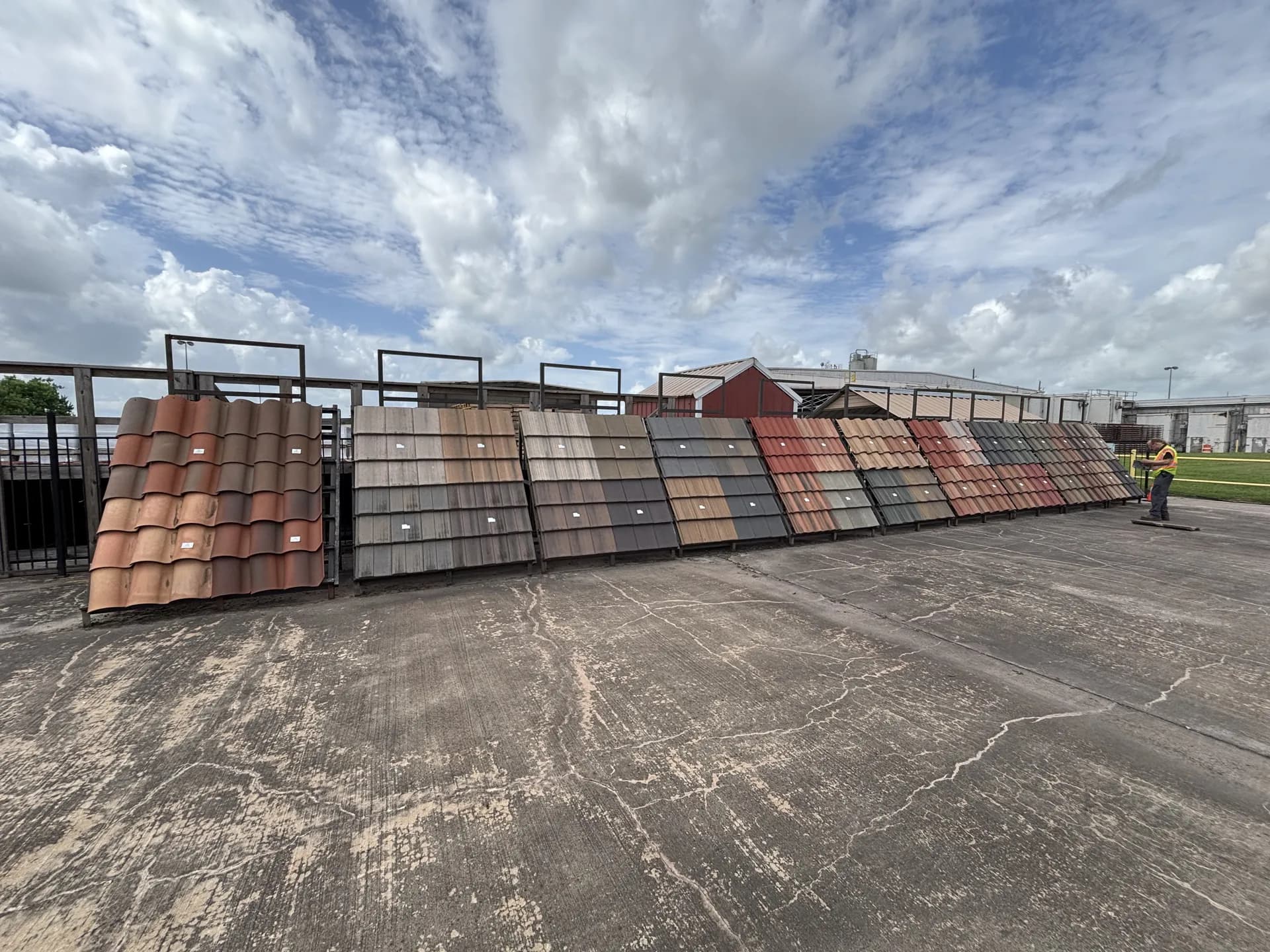
Metal roofing, asphalt shingle roofing, tile, slate, and synthetic shake all handle a Texas summer differently, and that's really the whole question when you're standing in front of a materials board trying to decide. Heat is the first thing to think about. Asphalt shingles absorb it and expand and contract every day, while metal panels reflect a large share of it away from the deck before it ever reaches the plywood underneath. Tile and slate sit somewhere in between, with enough mass to slow heat transfer even if they don't reflect it outright the way a metal panel does. That's part of why a real material recommendation should start with your specific roof, not a one-size answer.
Hail is the second factor, and it's not optional in this part of the state. Gulf Coast storm fronts push hail through The Woodlands and the surrounding counties most years, and materials respond to impact very differently. Metal generally shrugs off hail better than asphalt shingles, which can bruise, crack, or lose granules on contact. Tile and slate resist hail well too, though a hard enough strike can crack an individual piece, which is usually a repair conversation rather than a full replacement. Humidity and wind round things out. A material that traps moisture against the deck invites rot and algae growth, so ventilation and underlayment often matter as much as the material itself.
Comparing the Six Roofing Material Families We Install
ROYH Build Co installs six roofing material families across residential and commercial roofs, and each one fits a different combination of budget, roof style, and how long you plan to stay in the property. Some homeowners come to us already set on a look, like the vertical lines of standing seam metal or the tile roofs common on Mediterranean-style homes, while others are starting from scratch and comparing options for the first time, unsure where to even begin. Here's a quick rundown of each one and where it tends to make the most sense for a home or building in this climate.
- Metal roofing: low-maintenance and reflective, a strong fit for homeowners who want fewer replacement cycles over the life of the roof.
- Standing seam metal roofing: the cleanest-looking metal profile, with concealed fasteners that reduce the chance of a leak at the fastener point.
- Asphalt shingle roofing: the most familiar roofing material, with a lower upfront cost and a wide range of colors and styles.
- Tile roofing: concrete and Spanish tile that holds up well to heat and adds real curb appeal on the right style of home.
- Slate roofing: natural or composite slate for a distinctive, high-end look with strong weather resistance.
- Synthetic shake roofing: a wood-shake appearance with better impact resistance and none of the rot risk of real wood shakes.
None of these six is the automatic right answer for every roof. The right material depends on your roof's pitch, your home's architectural style, your budget, and how long you want to go before the next re-roof, which is exactly why we walk through the options with you rather than pushing one material by default.
What Our Supplier Relationships Mean for Your Roof
The material families above aren't generic. ROYH Build Co works directly with the manufacturers behind them, and that relationship affects what actually ends up on your roof. Our asphalt shingle installs run through GAF, Atlas, and CertainTeed. Our GAF and Atlas Platinum-tier certifications carry extended workmanship warranty coverage beyond each manufacturer's standard terms. That certification isn't a marketing badge. It means the manufacturer has reviewed our installation practices and stands behind the work alongside us. That matters if you ever need to make a warranty claim, and we make sure every homeowner understands what that coverage includes before the crew shows up.
The same principle applies across every material we install. McElroy Metal builds the panel systems behind our metal and standing seam roofing. Westlake Royal supplies the concrete and Spanish tile lines. DaVinci makes the composite slate we install for homeowners who want that look without the added weight of natural stone, and F-Wave supplies the synthetic shake shingles. Working through established suppliers means faster access to the right profile, color, and product line, and it means warranty support that goes beyond what a one-off material purchase would ever carry. It also means our crews can speak to each product's real installation requirements instead of learning them for the first time on your roof.
How ROYH Build Co Guides Your Material Selection
Most homeowners don't walk in already knowing which of these six materials they want, and that's normal. It's exactly what an assessment is for. We look at your roof's pitch and structure, your home's architectural style, how long you plan to stay in the property, and your budget, then narrow the six options down to the ones that actually make sense for your specific situation instead of handing you a generic recommendation. We'll also walk through maintenance expectations for each material, since a roof that looks great on day one but demands constant upkeep isn't always the right trade for every homeowner.
If your current roof is closer to the end of its life, that assessment usually turns into a broader conversation about roof replacement as a whole, not just the material sitting on top of it. We also serve both residential and commercial roofing projects, so if you're weighing a material decision for a commercial building rather than a house, the same supplier relationships and guidance apply there too. That's true whether the building is a retail storefront or a shop roof going on for the first time. Whichever material you land on, the goal stays the same. We want a roof installed correctly the first time, backed by a supplier relationship that's still there if you need it later.
Get Your Free Roofing Materials Estimate
Serving The Woodlands, Magnolia, and the greater Houston area, ROYH Build Co will assess your roofing materials needs and give you a straightforward recommendation.
Frequently Asked Questions
What is the best roofing material for Houston area weather?
There isn't one material that wins on every category. Metal roofing tends to perform best against heat and hail together, since it reflects sun and resists impact well. Asphalt shingles from GAF, Atlas, or CertainTeed hold up fine too and cost less upfront. Tile and slate add real durability and curb appeal but come with more weight and a higher installation cost. We'll look at your specific roof and budget before recommending one material over another.
Which roofing material lasts the longest?
Generally speaking, metal, tile, and slate roofing all tend to outlast asphalt shingle roofing by a meaningful margin, since they don't go through the same daily heat expansion and contraction that wears down shingle sealant strips and granules. Actual lifespan still depends heavily on installation quality, ventilation, and maintenance, so we'd rather walk your specific roof with you than quote a generic number that may not apply to your situation.
Can I switch roofing material types when I replace my roof?
In many cases, yes. Switching from asphalt shingle to metal, tile, or slate is common during a full replacement, but it depends on your roof deck's structural capacity, since tile and slate are considerably heavier than shingles or metal. We assess the existing framing and deck as part of the replacement process and tell you honestly which materials your structure can support before you commit to one.