
What Is a Gutter Guard, and Is It Worth It?
By Seth WeHunt · · 7 min read
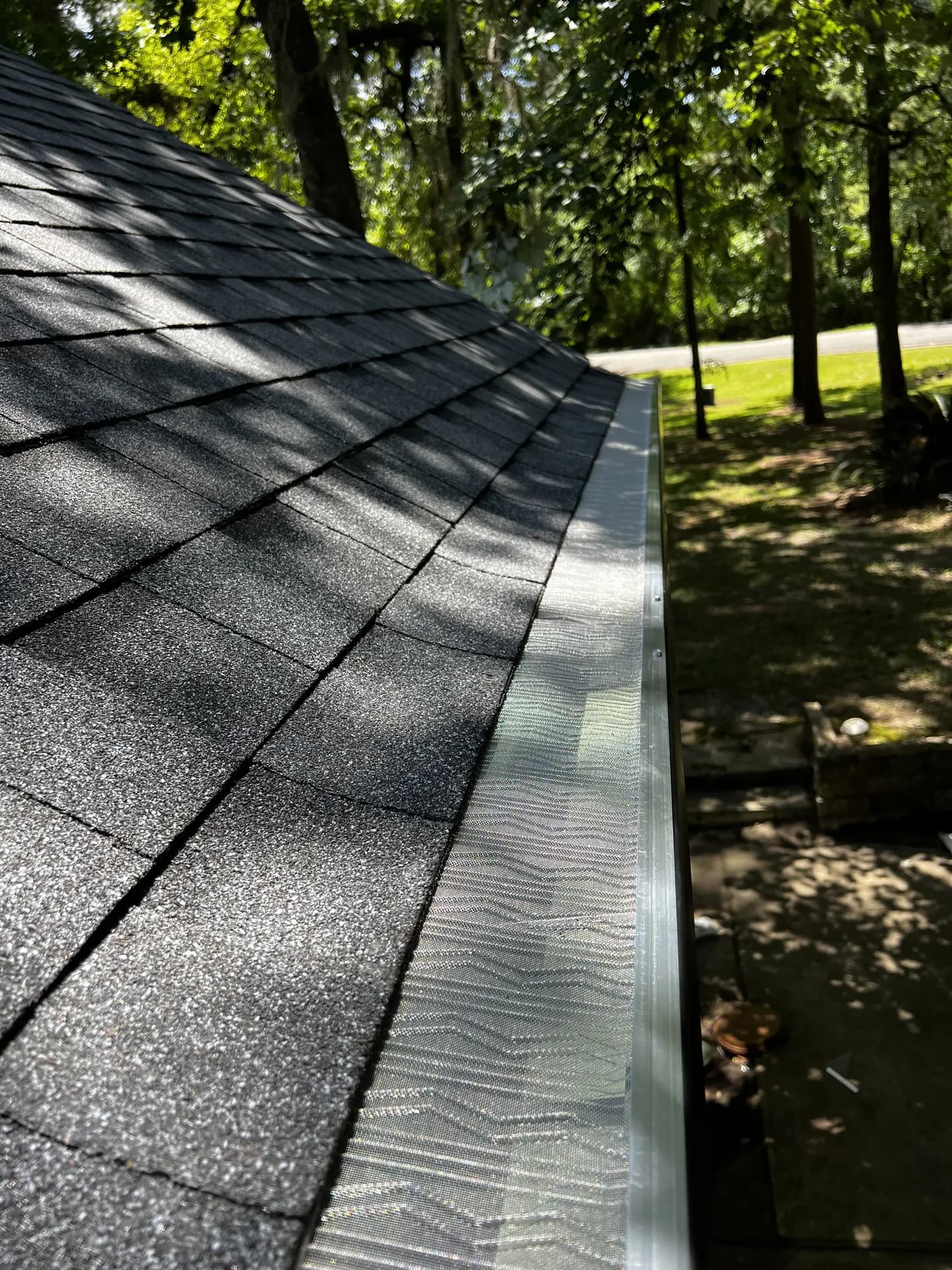
A gutter guard is a cover or insert that sits over your gutter channel and blocks leaves, pine needles, and other debris from piling up inside, while (in theory) letting water pass through freely. That's the short version. The longer, more honest version is that guards change what maintenance looks like. They don't remove it from your life entirely, and which guard you choose matters almost as much as whether you install one at all.
If you've ever climbed a ladder in August to scoop out a season's worth of wet, composted leaf sludge, you already understand the appeal. The real question is which type actually fits your property, and whether your lot even needs guards in the first place.
What a Gutter Guard Actually Does
Every guard style is trying to solve the same basic problem: separate water from solid debris before it reaches the bottom of the channel. Water is thin and clings to surfaces. Leaves, seed pods, and shingle grit are not, and they don't. Guards exploit that difference, either by filtering debris out with a mesh, deflecting it off a curved surface, or blocking it with a porous foam insert.
None of that changes physics, though. A guard still has to be sized correctly for your gutter profile, pitched at the right angle, and matched to the kind of debris actually falling on your roof. Get any of those wrong and you end up with a guard that works fine in a light rain and overflows in a real one.
The Main Types, and Where Each One Falls Short
There are four gutter guard categories most homeowners run into, and honestly, none of them is perfect. Here's how they compare.
| Type | How It Works | Where It Struggles |
|---|---|---|
| Micro-mesh | Fine stainless or aluminum mesh filters out debris down to fine grit and pine needles | Mesh pores can clog with pollen and roof grit over time and need an occasional rinse |
| Screen | Coarser mesh or perforated panel that snaps or screws over the gutter | Wider openings let small needles and seed pods through, so it's a partial filter at best |
| Reverse-curve (surface-tension) | Solid curved hood that uses water's surface tension to pull it around the lip while debris slides off the front | Heavy downpours can overshoot the curve entirely, and it's the most visible guard style from the ground |
| Foam insert | Porous foam block wedged into the gutter channel that lets water soak through while blocking larger debris | Foam degrades in UV and heat, and fine debris still lodges inside it over a few seasons |
Micro-mesh systems, including the LeafBlaster line we carry, tend to hold up best on lots with heavy pine or oak cover, because the mesh is fine enough to stop needles without choking off water flow. That's not a knock on the other styles. A reverse-curve guard on a mostly open lot with light debris can perform just as well for less money. The right answer depends more on what's actually falling on your roof than on which guard has the flashiest marketing.
The Pine Needle and Oak Tassel Problem
Wooded lots across Texas deal with a debris pattern that catches a lot of first-time gutter guard buyers off guard, no pun intended. Pine needles are thin enough to slip through wide-mesh screens, and they pack together into dense mats that a light guard can't shed. Oak trees are worse in a different way. Their spring tassel drop is heavy, sticky, and arrives all at once over a few weeks, followed months later by acorns and leaf litter in the fall.
That one-two punch is why a guard that works great on a mostly open lot can underperform on a heavily wooded property nearby. If your yard has mature pine or oak canopy close to the roofline, mesh size and guard pitch matter more than they would on a lot with scattered, smaller trees. A fine micro-mesh guard installed at the correct angle sheds most of that load. A coarse screen guard mostly just slows it down.
What Guards Do Not Eliminate
Here's the part most gutter guard sales pitches skip. Guards reduce how often you need to clean your gutters. They do not eliminate cleaning altogether, and any guard that claims otherwise is overselling itself.
Fine debris like shingle granules, pollen, and dust still settles on top of mesh guards over time and needs an occasional rinse. Downspouts can still clog below the guard line, especially at elbows and transitions, which is a separate maintenance item guards don't touch at all. And any guard system needs a periodic visual check after major storms, because a section that's come loose or shifted out of pitch stops filtering anything.
Think of a gutter guard as stretching your cleaning interval from twice a year to once every year or two, not as a way to never think about your gutters again. That's still a real win. It's just not the whole story.
Installation Quality Decides Whether the Guard Works
This is the factor that gets the least attention and probably matters the most. A guard's pitch relative to the gutter lip determines whether water sheets into the channel or shoots past it during a heavy downpour. Too shallow an angle and debris sits on top instead of sliding off. Too steep and water overshoots the gutter entirely.
Fastener spacing matters too. Guards that are under-fastened work loose after a season or two of wind and debris weight, which is when homeowners start blaming the product instead of the install. We fit guards to the gutter system that's already on the house in most cases, whether that's one we installed originally through gutter installation or an existing setup, and we always pair a guard install with a full gutter cleaning first, so nothing gets sealed in underneath the new cover.
When Gutter Guards Are Worth It, and When They're Not
If your home sits under heavy tree canopy, pine or oak especially, gutter guards are almost always worth the upfront cost. The alternative is climbing a ladder multiple times a year, and a properly fitted micro-mesh guard can stretch that down to an annual check instead. The math works in your favor fast once you factor in the risk of an overflow that soaks fascia boards or works its way into the grade around your foundation.
On a more open lot with minimal tree cover, the calculation changes. A twice-a-year gutter cleaning might already keep your system running fine without the added cost of guards. I'd push back on the idea that every home needs gutter guards installed by default. Some do. Some genuinely don't, and spending on a guard system there is money that could go toward something else on the house.
What I'd tell any homeowner weighing the decision is this: look up before you decide. If you can see needles or leaves accumulating in your roof valleys between rains, guards will earn their keep. If your roofline stays mostly clear, a regular cleaning schedule is probably the more sensible call.
Getting the Right Guard for Your Home
Gutter guards aren't a one-size-fits-all product, and the guard that works for an open-lot home might underperform on a heavily wooded property a few streets over. The type of tree cover overhead, your gutter's existing pitch, and how the guard gets fastened all shape whether you end up with a low-maintenance system or an expensive cover that still clogs.
ROYH Build Co evaluates your roofline and tree cover before recommending a guard type, and our gutter guard installation service pairs LeafBlaster micro-mesh systems with the rest of our gutter services lineup. For more on how often gutters actually need attention in a humid climate, see our related guide on how often gutters should be cleaned. Not sure whether your property needs guards or just a more consistent cleaning schedule? Reach out and we'll take a look at what's actually falling on your roof before recommending anything.
Seth WeHunt
Owner, ROYH Build Co
Get Your Roofing Quote
Serving The Woodlands, Magnolia, and greater Houston, ROYH Build Co offers free inspections and straightforward estimates.