
Siding
Vinyl Siding Installation in The Woodlands, TX
Vinyl Siding Installation in The Woodlands, TX
What's Included
Vinyl Siding Installation in The Woodlands, TX
Color-Through Vinyl Material
The color runs all the way through the panel instead of sitting on top as paint, so scratches and nicks don't expose a different shade underneath.
Insulated Vinyl Available
Foam-backed insulated panels add R-value and dent resistance for homeowners who want more than standard hollow-back vinyl.
Heat-Ready Installation
We nail every panel loose in the slot and leave manufacturer-spec expansion gaps at corners and trim, so panels don't buckle or bow during a Texas summer.
LumaNail Cleanup
We use LumaNail luminescent nails so stray fasteners are visible and collected before we leave your property.
Catch-All Debris System
A perimeter debris-catch system keeps old siding, trim scraps, and packaging out of your landscaping during the job.
Licensed, Insured, Free Estimates
Every vinyl siding project is covered under our licensed and insured status, and we inspect your home before quoting anything.
Why Vinyl Siding Still Makes Sense
Vinyl gets dismissed sometimes as the cheap option, and that reputation isn't entirely fair. Modern vinyl siding installation uses color-through material, meaning the color runs all the way through the panel instead of sitting on top as a coat of paint. Scratch it, and you won't see a lighter substrate underneath. That's a real difference from the vinyl a lot of homeowners remember from decades ago.
The bigger draw for most homeowners around The Woodlands is what vinyl doesn't ask of you. No repainting every few years. No caulking cracks in wood boards after a hot Texas summer splits them open. Vinyl sheds rain, resists rot, and holds its shape without the upkeep that wood, and even some fiber cement products, require.
It's also the most budget-friendly siding material we install, which matters when you're covering an entire house rather than a single wall. If you're weighing vinyl against other options, our siding page walks through vinyl alongside fiber cement and stucco so you can see where each one fits.
Installing Vinyl Siding for Texas Heat
Vinyl siding installation is simple in theory and easy to get wrong in practice, and heat is usually where a rushed installer cuts corners. Vinyl panels expand and contract with temperature more than almost any other siding material, sometimes moving noticeably across a long panel between a cool morning and a triple-digit afternoon. Panels nailed too tight can't move with that swing, and they buckle, bow, or pop loose within a year or two.
Our crews nail vinyl siding loose enough to let it float in the nailing slot, leaving the expansion gap manufacturers specify at every corner post, window trim, and J-channel. We also stagger seams so the panel joints don't line up in a visible pattern down the wall, a small detail that separates a clean installation from one that looks rushed the moment the sun hits it at an angle.
Vinyl Siding Replacement
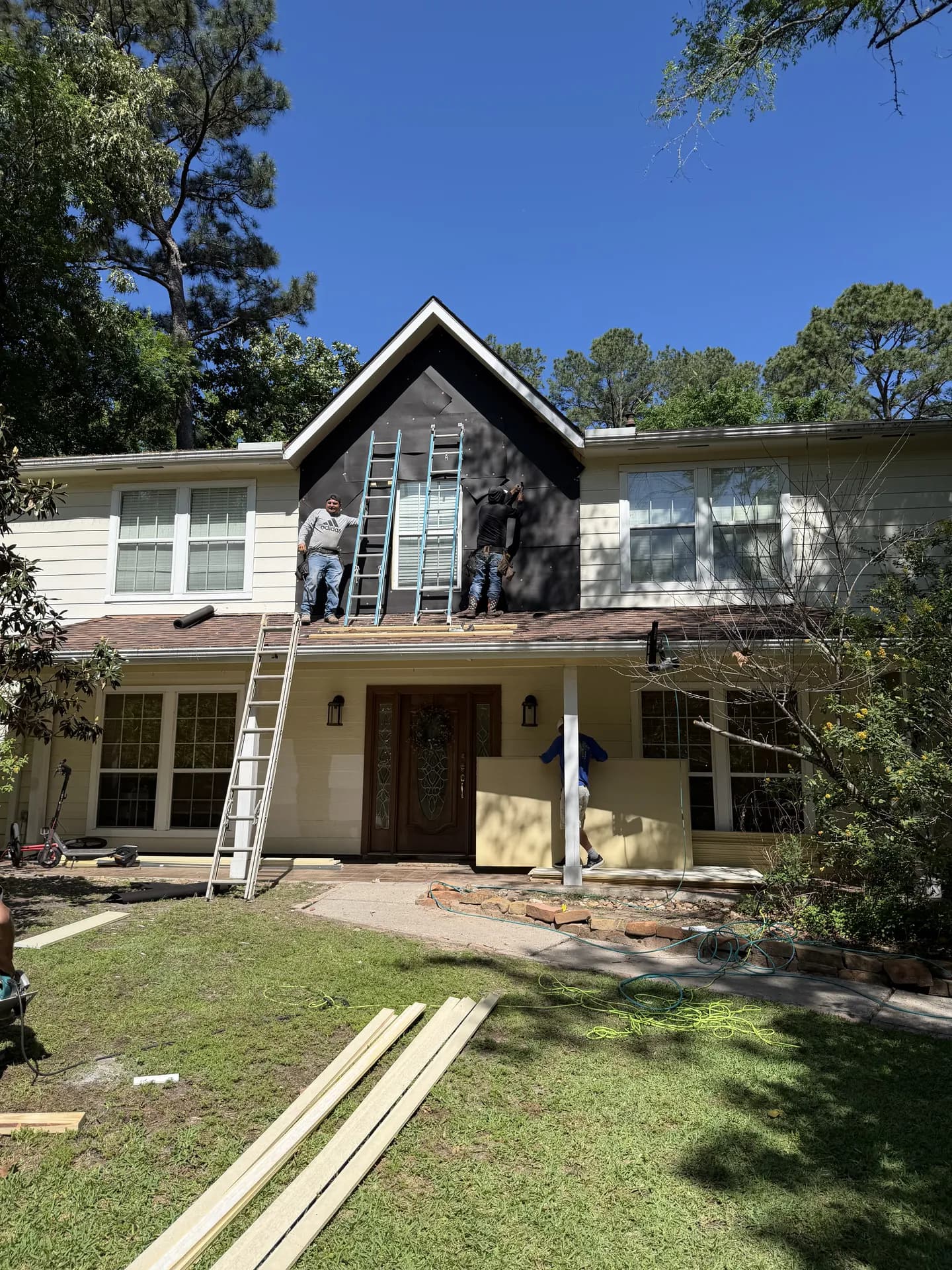
Replacing existing siding starts with pulling the old material off and checking the sheathing underneath for rot or moisture damage before a single new panel goes up. Skipping that step is how a replacement job ends up covering a problem instead of fixing it. Once the wall is sound, we install house wrap and new vinyl siding with the same expansion allowances used on a fresh installation. If your current siding is more patchwork than problem, our siding repair team can tell you whether a repair holds up before you commit to a full replacement.
Insulated Vinyl Siding
Standard vinyl siding is a single layer of PVC, thin enough that it does very little for a home's insulation on its own. Insulated vinyl siding adds a layer of rigid foam backing fused to the back of each panel, which does two things worth knowing about. It adds R-value to the wall assembly, which helps during both summer heat and the occasional cold snap, and it stiffens the panel so it resists denting and wall-waviness better than hollow-back vinyl.
The tradeoff is cost. Insulated panels run higher than standard vinyl siding, and not every home needs the extra R-value, especially one with newer wall insulation already in place. We'll walk you through both options during your estimate so you're choosing based on what your home actually needs, not just the upsell.
Is Vinyl the Right Fit for Your Home?
Vinyl isn't the right siding for every house, and we'd rather tell you that upfront than sell you something that doesn't fit. It's a strong choice for homeowners who want low maintenance and a reasonable price point, and it holds up well across most of Montgomery County's climate swings.
Where vinyl starts to lose ground is on higher-end homes, custom architecture, or properties where a heavier, more textured material reads better against brick or stone accents. If that sounds like your situation, our fiber cement siding installation page covers James Hardie and Nichiha products that cost more but offer a different look and, in some conditions, a longer service life.
Not sure which one makes sense for your home? That's what the estimate visit is for. We'll look at the house, talk through what you're trying to solve, and give you a straight answer instead of steering you toward whichever material has the better margin. For the full rundown of installation options across materials, visit our siding installation page.
Related Services
More Siding Services
Get Your Free Vinyl Siding Installation Estimate
Serving The Woodlands, Magnolia, and the greater Houston area, ROYH Build Co will assess your vinyl siding installation needs and give you a straightforward recommendation.
Frequently Asked Questions
How long does vinyl siding installation take on an average home?
Most single-family homes take a few days from tear-off (if replacing existing siding) through final trim, though the exact timeline depends on the home's size, how much of the sheathing needs attention, and whether you're choosing standard or insulated panels. We'll give you a specific window during your estimate.
Can vinyl siding be installed over existing siding, or does it need to come off first?
It depends on the condition of what's underneath. If the existing siding is flat, sound, and free of moisture damage, vinyl can sometimes go over it with the right furring strips. If we find rot, warping, or trapped moisture during inspection, we'll recommend removing the old siding first so we're not sealing a problem behind the new wall.
Does vinyl siding fade or crack in Texas heat?
Lower-quality vinyl can fade or grow brittle after years of direct sun, which is why the panel quality and the color-through construction matter. Installation quality matters just as much. Panels nailed without proper expansion room are far more likely to crack or warp than panels installed with the correct gaps, regardless of how good the material is.
What's the difference between vinyl siding installation and vinyl siding replacement?
Installation refers to putting vinyl siding on a home for the first time, typically new construction or a home switching from another material with bare sheathing exposed. Replacement means removing existing vinyl siding and installing new panels, which starts with a sheathing inspection to check for rot or moisture damage before anything new goes up.