What Is a Chimney Crown (and Why Does It Need Repair)?
By Seth WeHunt · · 7 min read
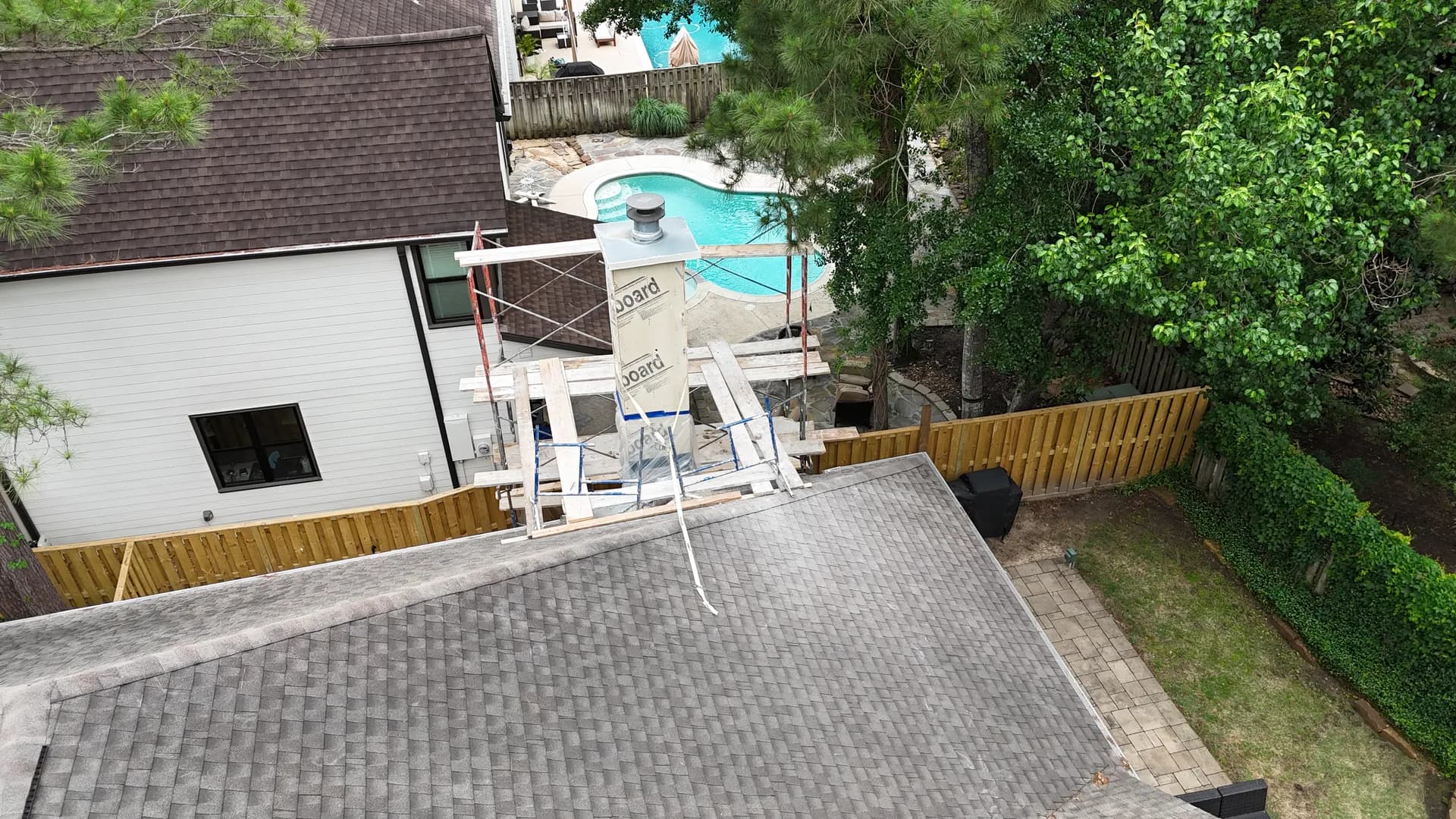
A chimney crown is the concrete or mortar slab poured across the very top of a masonry chimney, sealing the gap between the flue liner and the surrounding brick while sloping rainwater off the stack. It is the single hardest-working part of the whole chimney system. When it cracks, water stops running off and starts soaking in, and everything below it, brick, mortar, firebox, is suddenly exposed.
Homeowners rarely think about the crown until a stain shows up on the ceiling near the fireplace, or a mason points a flashlight up the flue and says the word "spalling." By then the crack has usually been doing quiet damage for a season or two. Understanding what the crown actually is, and how it differs from a chimney cap or a chase cover, is the first step to catching the problem while it is still cheap and simple to fix.
Crown vs. Cap vs. Chase Cover: Why Everyone Mixes Them Up
These three terms get used interchangeably online, and honestly, it is not the homeowner's fault. All three sit at the top of a chimney and all three keep water out. But they are different parts, made of different materials, doing slightly different jobs.
| Component | What It Is | What It Does |
|---|---|---|
| Chimney Crown | The poured concrete or mortar slab across the top of a masonry chimney | Seals the flue-to-brick gap and sheds rainwater away from the stack |
| Chimney Cap | The metal cover mounted over the flue opening, usually sitting on or through the crown | Blocks rain, animals, and debris from entering the flue while smoke still vents freely |
| Chase Cover | The metal panel that caps a factory-built, framed chimney chase (not a masonry stack) | Does the same water-shedding job as a crown, but for a prefabricated chimney enclosure |
Here is the short version: a crown belongs to a masonry chimney and is built from concrete. A cap is metal, sits above the crown, and only covers the flue opening itself. A chimney cap installation is a much smaller, cheaper fix than crown work, which is exactly why so many people assume replacing the cap will solve a crown problem. It will not. If the slab underneath the cap is cracked, a brand new cap just sits on top of a leak that is still happening.
How a Chimney Crown Actually Fails
Most crowns do not fail because of one dramatic event. They fail slowly, from the inside of the crack outward.
The most common starting point is a hairline shrinkage crack. Concrete shrinks slightly as it cures, and if the original crown was mixed with too much sand, poured too thin, or built without a proper overhang and drip edge, those shrinkage cracks show up early, sometimes within the first few years. On their own, a hairline crack barely matters. The problem is what happens next.
Freeze-thaw cycling gets blamed for most crown damage in colder states, but that is not really the driver here. Hard freezes are rare across most of Texas, so ice expansion inside a crack is not the main threat homeowners in this region face. What actually wears a crown down is water cycling: rain fills the crack, the sun bakes the surface dry within hours, and the concrete expands and contracts through that heat swing day after day. Add in the humidity that never fully lets the masonry dry out, and a hairline crack widens a little more with every storm. It is a slower process than freeze-thaw, but the end result is the same crumbling, pitted surface.
Left alone long enough, that surface starts to spall, meaning small chips and chunks of the crown break away entirely, and efflorescence (the white, chalky mineral deposits left behind as water evaporates out of the masonry) starts showing up on the brick just below the crown line. That white staining is one of the clearest visible signs a crown is already letting water through.
The Damage Cascade: From a Hairline Crack to a Damaged Firebox
A cracked crown rarely stays a "crown problem" for long. Water does not just sit at the top of the chimney once it finds a way in. It travels.
- Water enters through the crack and saturates the concrete slab itself, which is porous even when intact.
- The surrounding brick and mortar absorb the moisture, weakening mortar joints and causing brick faces to spall or flake.
- Moisture works down the flue liner, especially in older chimneys with clay tile liners that have their own joints and seams.
- Water reaches the firebox and damper, where it rusts metal dampers, stains the firebox interior, and can eventually rot wood framing hidden behind the chimney chase.
By the time a homeowner notices a ceiling stain near the fireplace or smells musty air on rainy days, the leak has usually been running for a while. That is the real cost of ignoring a crown crack: what starts as a repair to a single concrete slab can turn into masonry repair, a new damper, and drywall work if it goes unaddressed long enough.
Repair Options: Sealing, Resurfacing, or Recasting
Not every damaged crown needs to be torn out and rebuilt. The right fix depends entirely on how far the deterioration has gone.
Sealing is the least invasive option and works well for hairline cracks caught early. A flexible, waterproof crown sealant is brushed or troweled over the surface to bridge small cracks and block water intrusion without disturbing the underlying concrete. It is a maintenance step, not a structural fix, and it needs to be reapplied periodically.
Resurfacing comes in when cracking has moved past the superficial stage but the crown itself is still structurally sound. A bonding agent is applied to the existing slab, then a new mortar wash is built up over the top to restore a smooth, properly sloped shedding surface. This is a good middle option for a crown that is cracked and spalling in a few spots but has not lost its structural integrity.
Recasting is the full fix, and it is the right call when the crown is crumbling at the edges, missing sections, or was never built correctly in the first place (no drip edge, no overhang past the brick, or poured flush against the flue instead of around it with an expansion gap). Recasting means removing the failed crown entirely and pouring a new one to the correct specifications. It corrects a design flaw instead of patching around it, which is why it is the right call once a crown has failed structurally rather than superficially. Our chimney crown repair team evaluates which of these three approaches actually fits the damage in front of them rather than defaulting to the most expensive one.
How Often Should a Chimney Crown Be Inspected?
A crown that is checked once a year rarely turns into an emergency. A crown nobody looks at for a decade almost always does.
A good rule of thumb: have someone look at the crown once a year, ideally before burn season starts, and again after any major hailstorm or high-wind event. That look is part of the free estimate on any chimney repair call. Hail in particular is hard on crowns because it chips at a surface that is already exposed to more weather than almost any other part of the roofline. If you are buying or selling a home with a masonry fireplace, get the crown and flashing looked at as part of that checklist too. A cracked crown is not always visible from the ground, and it is one of the easier things for a routine home inspection to miss entirely.
The crown is not a glamorous part of the house. Nobody remodels around it or shows it off. But it is doing more work than almost anything else on the roofline, and a small crack today is a lot less involved to deal with than the masonry, damper, and firebox damage it can cause down the line. If you have noticed cracking, staining, or crumbling at the top of your chimney, get it looked at before the next round of storms rolls through. Our chimney services team handles crown repair, cap installation, masonry work, and full inspections, so whatever stage the damage is at, there is a fix that fits it.
Seth WeHunt
Owner, ROYH Build Co
Get Your Roofing Quote
Serving The Woodlands, Magnolia, and greater Houston, ROYH Build Co offers free inspections and straightforward estimates.