
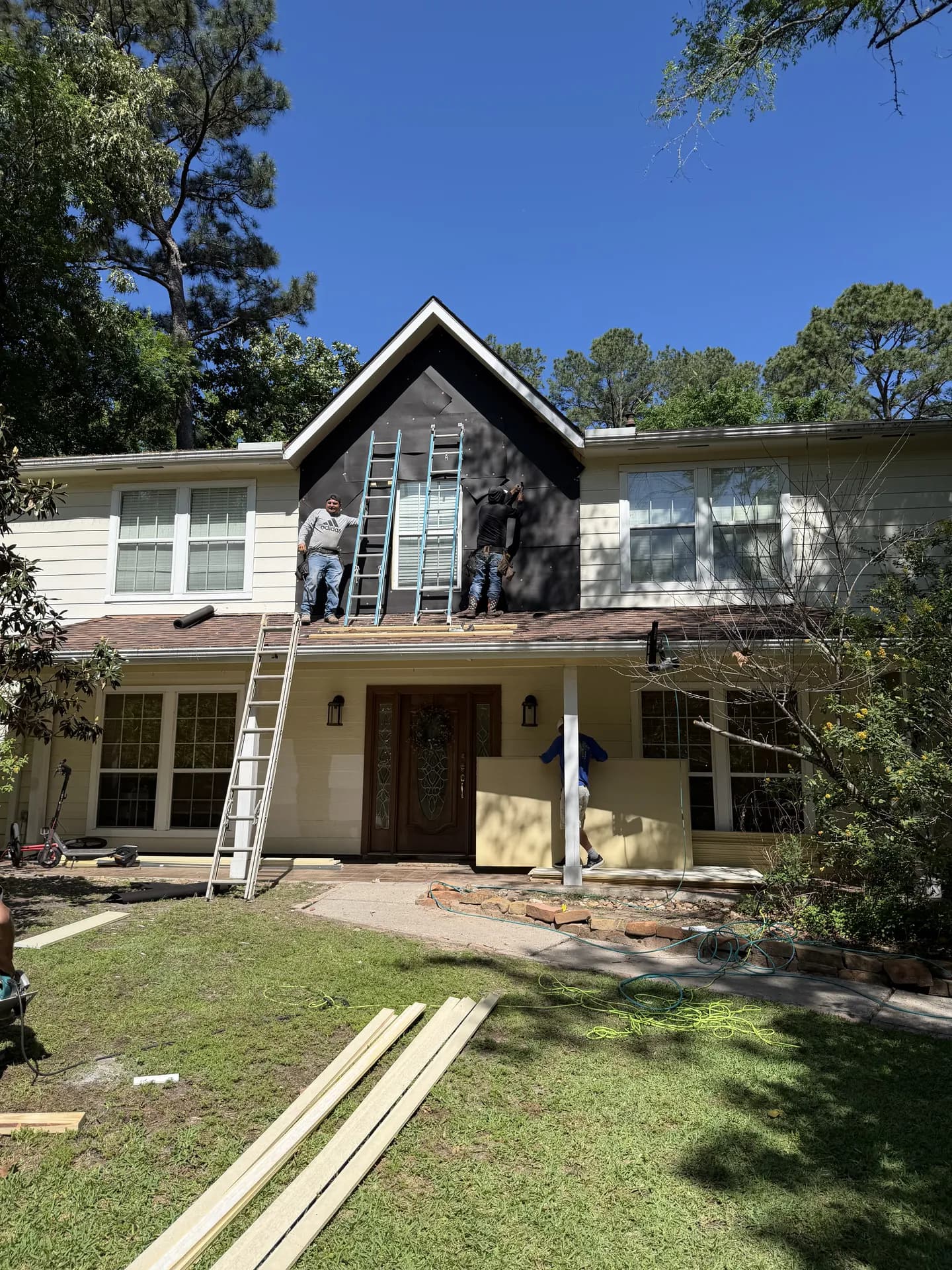
Siding
Siding Replacement in The Woodlands, TX
Rotted boards and warped panels don't fix themselves. ROYH Build Co tears off failing siding and rebuilds the exterior with materials suited to Texas weather.
What's Included
Siding Replacement in The Woodlands, TX
Full Tear-Off, Not a Cover-Up
We remove old siding down to the sheathing instead of nailing new panels over problems that are still underneath.
Moisture Barrier Installed Correctly
A new moisture barrier goes on before a single new panel, so the wall behind your siding stays protected long after installation day.
Vinyl, Fiber Cement, and Wood Options
We install and replace siding in the material that fits your home, including James Hardie and Nichiha fiber cement products.
LumaNail Marked Fasteners
Every nail we drive uses LumaNail, a luminescent fastener that makes cleanup more thorough since dropped nails are easier to spot and remove from the yard.
Catch-All Debris Containment
Our Catch-All system catches siding scraps and old material at the base of the wall during tear-off, so less debris ends up in your landscaping.
Locally Owned, On-Site Estimates
ROYH Build Co is locally owned and operated, serving The Woodlands and Magnolia, TX. We walk your property in person before quoting a replacement scope.
Signs Your Siding Has Passed the Point of Repair
Not every damaged wall needs a full replacement. But some do, and knowing the difference saves you from paying for a repair that won't hold. Rot is the clearest signal. If a screwdriver sinks into a wood panel or the trim around a window feels soft, the material underneath has already broken down, and no amount of caulk fixes that.
Warping is the second sign. Vinyl and wood siding both expand and contract with heat and moisture. Panels that have buckled, bowed, or pulled away from the wall are past the point where a spot repair will sit flush. Once a panel warps, the seal behind it is usually compromised too.
Then there's repeated moisture. If the same section of siding keeps failing, staining, or growing mildew no matter how many times it gets patched, the problem isn't the panel. It's what's happening behind it. That pattern usually means water has found a consistent path in, and replacement is the only way to actually stop it rather than delay it. If your siding is showing isolated damage rather than this kind of widespread failure, our siding repair team can often fix it for less.
What a Full Siding Replacement Involves
A real siding replacement starts with removal, not installation. We tear off the old siding down to the sheathing and inspect what's underneath. This step matters more than most homeowners expect. Rotted sheathing or hidden water damage doesn't show up until the old panels come off, and we'd rather find it now than let a crew install over it.
Next comes the moisture barrier. This is the layer that actually keeps water out of your wall assembly, and it's easy to rush or skip if a contractor is focused only on the finished look. We install it properly every time, lapped and sealed the way it's meant to be, before a single new panel goes up.
From there, installation follows the manufacturer's specifications for whichever material you've chosen. Fastener spacing, expansion gaps, and flashing details around windows and doors all affect how long the new siding lasts. This is the same process our siding installation crews use on new-construction and first-time siding jobs, just applied to a home that's shedding its old exterior first.
Upgrading From Vinyl to Fiber Cement
Replacement is also the moment most homeowners think about upgrading materials, and honestly, it's the right time to do it. Tearing off vinyl siding and putting vinyl back up is the cheaper path, but a lot of homeowners in The Woodlands use the tear-off as a chance to move to fiber cement instead.
Fiber cement holds up differently than vinyl. It doesn't warp in heat, it resists impact better, and it takes paint and texture in ways vinyl can't match. We install James Hardie and Nichiha fiber cement products for homeowners making that switch, and both brands build products specifically rated for the kind of heat and humidity swings this region gets. Our dedicated fiber cement siding installation page covers the product lines in more depth if you're comparing options.
Not every home needs the upgrade. Vinyl is a perfectly reasonable choice for a lot of properties, and we won't push a more expensive material on a homeowner who just wants a straightforward, functional replacement. We'll lay out the real differences and let you decide what fits your home and how long you plan to stay in it.
What Affects the Scope of a Siding Replacement
Every replacement is different, and the scope depends on a handful of factors rather than a flat rate. Size is the obvious one. A full exterior tear-off on a two-story home covers a lot more wall area than replacing siding on a single gable or the section around a bay window.
Material choice shifts the scope too. Vinyl, fiber cement, and wood each install differently, with different fastening methods, trim requirements, and crew time. Moving from vinyl to fiber cement, for example, changes both the labor involved and the finish work around corners and openings.
Prep work is the factor homeowners underestimate most. A home with rotted sheathing underneath the old siding needs that sheathing replaced before new material goes up, and that adds time that isn't visible until tear-off begins. Trim condition matters too. So does the number of windows and doors to flash around, and how much of the exterior actually needs new siding versus a partial section. All of it factors into the final scope. We walk every property in person and explain what we find before recommending a plan, covering homes throughout our full siding services area including The Woodlands.
Get Your Free Siding Replacement Estimate
Serving The Woodlands, Magnolia, and the greater Houston area, ROYH Build Co will assess your siding replacement needs and give you a straightforward recommendation.
Frequently Asked Questions
How do I know if my siding needs replacement instead of repair?
Look for rot you can press a finger or screwdriver into. Also watch for panels that have visibly warped or pulled away from the wall, and moisture damage that keeps coming back in the same spot after being patched. Isolated cracks or a single damaged panel are usually repairable. Widespread rot, repeated moisture intrusion, or warping across multiple sections point to replacement. We inspect the wall in person before recommending either option, since guessing from photos alone isn't reliable.
How long does a full siding replacement take?
It depends on the size of the home, the material chosen, and what we find once the old siding comes off. A single wall or gable section can often be completed in a day or two. A full exterior tear-off and replacement on a larger home takes longer, especially if sheathing repair is needed underneath. We give you a specific timeline after the inspection rather than a generic estimate.
What's the difference between vinyl and fiber cement siding?
Vinyl is lighter, generally faster to install, and holds up well in most conditions, but it can warp under intense heat and impact damage. Fiber cement, including James Hardie and Nichiha products, resists warping and impact better and holds paint and texture more like a traditional finish, though it's a heavier material with different installation requirements. Both are reasonable choices, and which one fits depends on your home and how you want the exterior to look and perform long-term.
Do you replace siding on the whole house or just damaged sections?
Both. Some homes only need a section replaced, like a single gable or the wall around a leaking window, while others need a full tear-off across the exterior. We assess the actual condition of your siding and sheathing before recommending scope, and we won't sell you a full replacement if a partial section will do the job.