
Chimney Services
Chimney Flashing Repair in The Woodlands, TX
The joint where your chimney meets the roof is where most leaks start.
What's Included
Chimney Flashing Repair in The Woodlands, TX
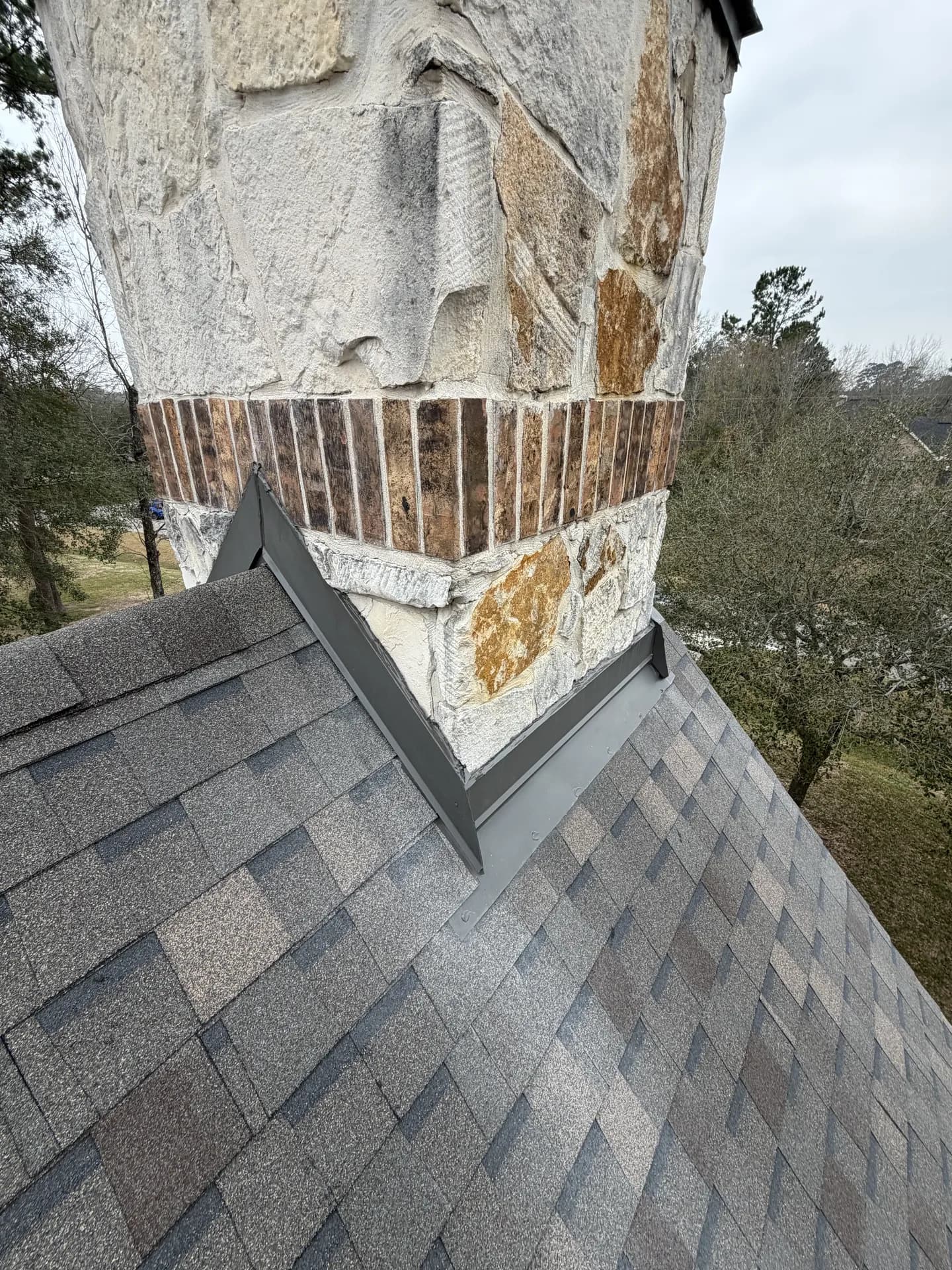
Step Flashing Replacement
Individual L-shaped flashing pieces get rebuilt and woven back under each shingle course along the sides of the chimney, not caulked over the top of failing metal.
Counter Flashing Reseal
The counter flashing set into the masonry above the step flashing gets re-cut into a clean reglet joint and resealed so water sheds away from the chimney instead of behind it.
Roof-Chimney Integration
Underlayment and shingles get tied back into the repair, not just patched around it, so the flashing works with the roof system instead of against it.
Cricket and Saddle Check
Wide chimneys need a cricket, or saddle, behind the uphill side to divert water. We check for one and rebuild it if it's missing or failing.
Storm-Rated Materials
Flashing gets sized and fastened for the wind and rain chimneys in Montgomery County take on, not the thinnest metal that meets code.
Licensed and Insured Crews
Every chimney flashing repair is performed by a licensed and insured ROYH Build Co crew, working from the roof deck, not just the chimney face.
Why Chimney Flashing Is the Most Common Leak Source
Ask any roofer where a chimney leak actually starts and the answer is almost always the same spot: the flashing. Not the crown, not the mortar joints, the flashing. That thin strip of metal is doing a hard job. It has to seal the gap between two completely different building materials, brick or stone masonry on one side and shingles or underlayment on the other, and those two materials expand, contract, and settle at different rates through every hot Texas summer and every cold front that blows through.
Flashing takes direct sun, wind-driven rain, and freeze-thaw cycling year after year. The metal fatigues, the sealant dries out and cracks, and nail holes widen just enough to let water in. None of that shows up as an obvious hole. It shows up as a stain on a bedroom ceiling weeks after the storm that actually caused it, which is exactly why flashing gets blamed less often than it should.
Step Flashing vs. Counter Flashing, Explained Simply
There are two separate pieces working together at every chimney, and confusing them is where a lot of bad repairs start. Step flashing is a stack of small L-shaped metal pieces, one per shingle course, tucked under the shingles along the sides of the chimney as it steps up the slope. Counter flashing is the piece above it, set into a cut joint in the mortar or brick and folded down over the step flashing to cap it off.
Step flashing sheds water down onto the roof. Counter flashing keeps water from getting behind the step flashing in the first place. When either one fails on its own, or when someone tries to fix the whole assembly with a bead of roofing cement instead of replacing the metal, the leak just moves somewhere else on the chimney. That's the short version of why chimney repair so often comes back to a flashing conversation.
Why a Roofer Fixes Flashing Right
Chimney flashing sits on both sides of a line that a lot of chimney-only companies don't cross. The masonry side is chimney work. The shingle and underlayment side is roofing work. A company that only handles the masonry side has to work around the roofing half, and that's how you end up with counter flashing that's been reset into good mortar sitting above step flashing that was never actually tied back into the shingle courses.
ROYH Build Co works both sides of that joint on the same visit. When we replace step flashing, the shingles above and beside it get pulled back, new underlayment gets tied in where it's compromised, and the flashing gets woven back into the roof system the way it was designed to work, not laid on top of it. The counter flashing gets cut back into the masonry and resealed to match. It's chimney service and roof repair handled as one job because on this part of the house, that's what it actually is.
The Misdiagnosis Problem
A chimney leak and a roof leak can look identical from inside a bedroom or attic, and that leads to a lot of wasted repair visits. Homeowners call a roofer, get told the leak is coming from the chimney, call a chimney company, and get told it's a roofing issue. Meanwhile the water keeps finding its way in through the same flashing joint the whole time.
Our process starts with a straightforward look at the full assembly, chimney and roof deck together, to find exactly where water is getting past the flashing before any repair begins. We check the crown, cap, and masonry condition alongside the flashing itself, since a cracked crown can mimic a flashing leak from inside the house. If the flashing repair is part of a broader roof repair around the chimney penetration, we handle that in the same scope instead of sending you to book a second contractor for the roof side.
Related Services
More Chimney Services Services
Get Your Free Chimney Flashing Repair Estimate
Serving The Woodlands, Magnolia, and the greater Houston area, ROYH Build Co will assess your chimney flashing repair needs and give you a straightforward recommendation.
Frequently Asked Questions
What's the difference between step flashing and counter flashing?
Step flashing is the row of small L-shaped metal pieces tucked under the shingles along the sides of the chimney. Counter flashing sits above it, cut into the mortar joint or brick, and folds down to cover the step flashing. They work as a pair. A leak can come from either one failing on its own.
How do I know if my chimney flashing is leaking?
Watch for water stains on the ceiling or attic near the chimney, damp or discolored drywall after a heavy rain, rust streaks running down the flashing itself, or visible gaps where the metal has pulled away from the masonry or shingles. Any of these is a sign the flashing needs a closer look.
Can chimney flashing be repaired, or does it need full replacement?
It depends on the condition of the metal. Flashing that's still structurally sound but has a failed seal or a small gap can often be resealed or partially replaced. Flashing that's corroded, undersized for the chimney, or was installed without proper step and counter pieces usually needs full replacement to stop the leak for good.
Why does a roofing contractor handle chimney flashing instead of a chimney-only company?
Chimney flashing spans two building systems, the masonry chimney and the roof deck, shingles, and underlayment around it. ROYH Build Co works on both sides of that joint on the same visit, so the step flashing gets tied back into the roofing system instead of just caulked against it from the chimney side.