Brands
Fiber Cement Siding in The Woodlands, TX | James Hardie
ROYH Build Co installs James Hardie siding for homeowners across The Woodlands and Conroe, TX who want an exterior built to handle Gulf Coast humidity, heat, and storm weather without the upkeep wood or vinyl siding demands.
What's Included
James Hardie in The Woodlands, TX
James Hardie Siding Installation
We install James Hardie siding on new builds, full replacements, and additions, following the manufacturer's fastening and clearance specs on every job.
HardiePlank Lap Siding
The classic horizontal lap profile, available in a range of widths and textures for a traditional or craftsman-style exterior.
HardiePanel Vertical Siding
A clean vertical profile that reads more modern, whether it's covering a whole elevation or working as an accent alongside lap siding.
Engineered for Humid Climates
James Hardie formulates its HZ10 product line specifically for humid Gulf Coast conditions, a different mix than what ships to drier parts of the country.
ColorPlus Factory Finish Options
Factory-applied color systems that resist fading and chipping, so you skip the repaint cycle that vinyl and wood siding eventually demand.
Manufacturer-Spec Installation
Every panel goes up with the fastener spacing, clearances, and flashing details James Hardie requires to protect your material warranty.
Who James Hardie Is and Why Fiber Cement Fits This Climate
James Hardie has been making fiber cement building products since 1888, when the company got its start in Australia. It brought engineered fiber cement siding to the U.S. residential market in the 1980s, and today it's the name most homeowners recognize the moment they start comparing siding materials. That reputation is earned. Fiber cement is made from cellulose fibers, sand, and cement pressed into a dense board, and it behaves nothing like wood or vinyl once it's up on a wall.
Southeast Texas is hard on exterior materials. Summers stay hot and humid for months at a stretch. That kind of moisture swells wood siding and can warp lower-grade vinyl. It draws termites too. Fiber cement doesn't soak up water the way wood does, and it won't attract wood-boring insects. James Hardie engineers a specific formulation, HZ10, for humid climates like the Gulf Coast, which is a different mix than what ships to drier regions of the country. That's not a marketing line. It's a real material difference, and it's a big reason we point homeowners in The Woodlands and Conroe toward Hardie when they're tired of repainting or patching soft siding every few years.
James Hardie Product Families
James Hardie is one of the fiber cement suppliers listed on our brands page, alongside Nichiha, another fiber cement line we install for homeowners who want a more contemporary panel look. Hardie itself builds several product families around different looks, and we install the full range. Which one fits your home usually comes down to architecture and personal taste more than performance, since the core material behaves the same across the lineup.
HardiePlank Lap and HardieShingle Siding
HardiePlank is the horizontal lap profile most people picture when they hear "Hardie siding." It comes in a handful of widths and textures, from smooth to a wood-grain look, and it suits traditional and craftsman-style homes well. HardieShingle mimics the staggered, textured look of cedar shakes without the maintenance real wood shingles demand, which makes it a common choice for accent gables and dormers.
HardiePanel Vertical Siding and Trim
HardiePanel gives you a clean vertical profile that reads more modern, and it works well on contemporary builds or as an accent alongside lap siding elsewhere on the house. Matching HardieTrim boards finish out corners, window and door surrounds, and fascia, so the whole exterior reads as one system instead of mismatched parts. Most of these products are also available in ColorPlus, James Hardie's factory-applied finish, which is baked on to resist fading and chipping longer than a field-applied paint job typically does.
James Hardie Siding Installation
A James Hardie product is only as good as the installation behind it, and that's where a lot of siding jobs fall short. The material is heavier than vinyl and needs different handling from the first cut to the last piece of trim.
How We Install James Hardie Siding
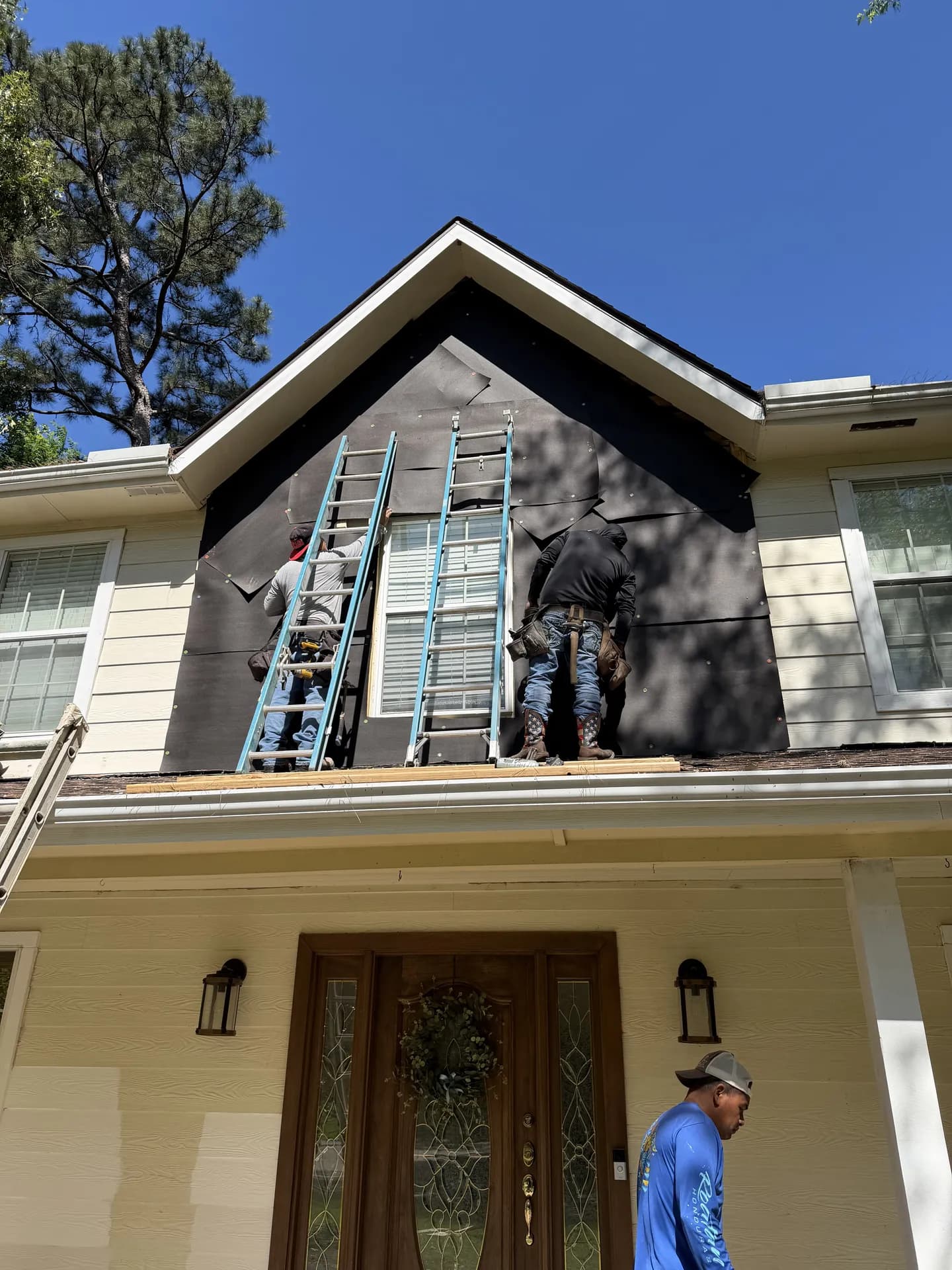
Our crews follow James Hardie's published installation instructions on every job, not a generic siding approach borrowed from a different material. That means keeping the required clearance between siding and grade, roofline, and decking. It means flashing every window, door, and horizontal joint before the next course goes up. Fastener spacing and depth follow what Hardie specifies for the product and climate zone, since driving fasteners too tight or too loose is one of the fastest ways to void a material warranty. Skip any of those steps and moisture gets trapped behind the siding. That kind of damage doesn't show up right away. It shows up years later, after it's already worked on the sheathing underneath, which is exactly why we don't cut corners on the parts nobody sees once the siding is up. Our fiber cement siding installation page covers how we approach Hardie and Nichiha installs side by side, and our siding page has the full range of materials we work with.
Get Your Free James Hardie Estimate
Serving The Woodlands, Magnolia, and the greater Houston area, ROYH Build Co will assess your james hardie needs and give you a straightforward recommendation.
Frequently Asked Questions
Is James Hardie siding better than vinyl siding?
Fiber cement holds up differently than vinyl. James Hardie siding resists impact, heat warping, and fading better than most vinyl products, and it carries a heavier, more substantial feel against the house. Vinyl usually costs less upfront and goes up faster. The right call comes down to how long you want the siding to perform before you're back to replacing it.
Does James Hardie siding need to be repainted?
Not if you choose a ColorPlus finished product. James Hardie's factory-applied color system is baked on and built to resist fading and chipping for years, so it skips the initial paint step entirely. Go with primed, paint-ready Hardie siding instead, or want a custom color outside the ColorPlus lineup? Then you'll need to paint it after installation and repaint on a normal schedule after that.
Is upgrading to James Hardie siding worth it?
For most homeowners comparing siding materials for a full replacement, yes. James Hardie resists moisture, pests, and fire better than wood, and it holds up to sun and humidity better than lower-grade vinyl. It typically costs more upfront than vinyl, so the upgrade makes the most sense if you're planning to stay in the home long enough to get the benefit, or if you've already dealt with recurring problems on your current siding.
What makes James Hardie siding different from other fiber cement brands?
The core material, fiber cement, is similar across brands. What differs is the product lineup and finish options. James Hardie offers lap, panel, and shingle profiles with ColorPlus factory finishes, while Nichiha, another brand we install, focuses more on architectural wall panels for a distinct modern look. We'll walk through both options with you before you commit to either one.